A roman shade is the window covering you notice in a neighbor’s living room without being able to name it: one panel of fabric that draws up into neat horizontal folds and stacks at the top of the glass. What are roman shades good for in a Bergen County home, how do they differ from the curtains hanging in the next room, and which fold should you order? Here are the choices you actually have to make, so you can walk into our Palisades Park showroom knowing what to ask for.
Short answer
Roman shades are fabric shades that fold up into horizontal pleats as you raise them, instead of rolling onto a tube or tilting on slats. They give you the softness of drapery with the tidy footprint of a shade, and the fabric plus its lining sets how much light gets through. Flat, hobbled and relaxed are the three folds most people choose between.
What Are Roman Shades Made Of, and How They Fold
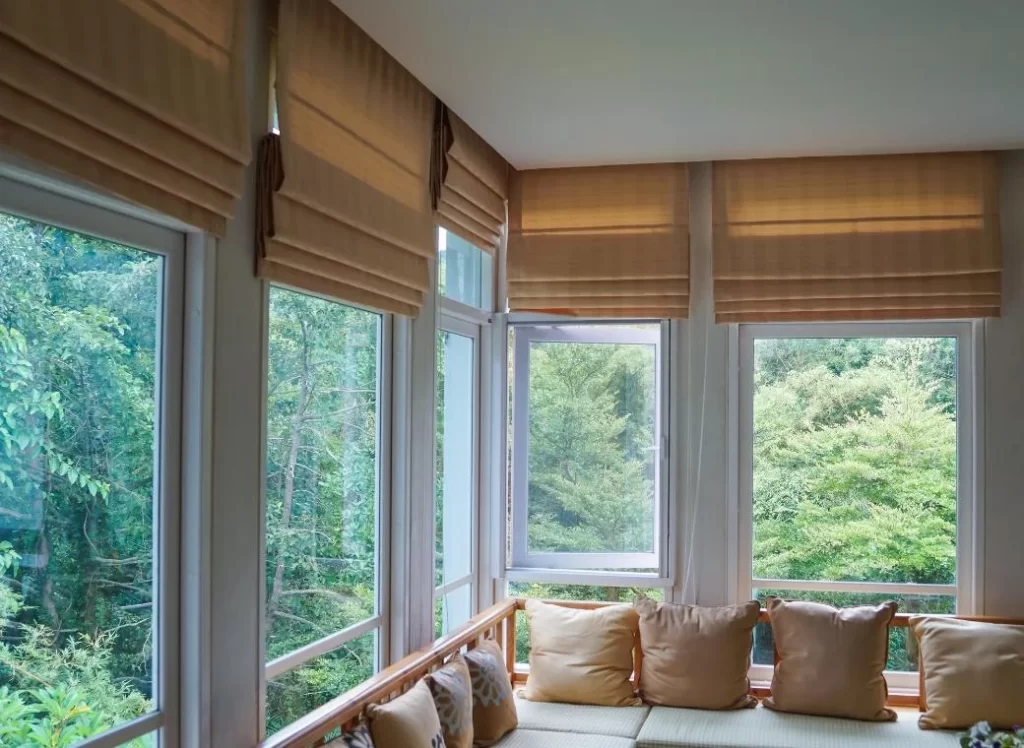
Behind the fabric is a set of horizontal rods or rings across the back of the panel. Lift cords run through them to a headrail at the top. Pull the cord or press the button and the panel gathers along those lines into stacked folds. Let it down and it lies flat against the glass again.
Because the fabric stacks upward, a roman shade takes no floor space and nothing hangs beside a sofa arm or over a baseboard heater. That matters in the older colonials and capes around Bergen County, where a window often sits close to a radiator, a stair rail or a piece of furniture.
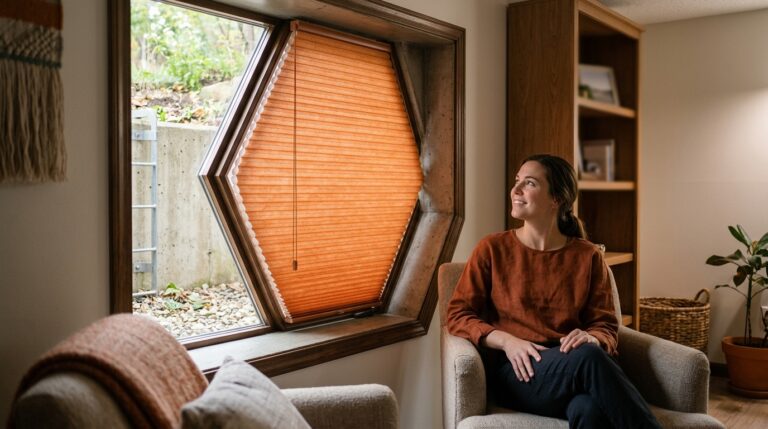
They mount two ways. An inside mount sits inside the window frame and leaves your casing and molding visible, which is the look most people want on a trimmed window. An outside mount hangs on the wall above the opening, hides an out of square window, and cuts the light that leaks around the edges. See more roman shade options or browse the full shade lineup.
The Three Folds You Are Choosing Between
Flat fold
The panel is smooth when it is down, so a pattern reads exactly as it does on the fabric sample. Raised, it stacks in even bands at the top. This is the tailored, quiet option, and it suits most modern rooms and most patterned fabrics.
Hobbled, also called looped
The fabric holds soft cascading loops even when the shade is fully lowered. You get depth and a heavier, traditional look, and the folds soften a tall window that would otherwise read as a blank rectangle. Hobbled shades use more fabric than flat, so a bold print gets busy fast. Solids and textures do better here.
Relaxed, also called casual
Instead of hard horizontal lines, the bottom edge dips into a gentle curve between the outer cords. It reads informal and works in a breakfast nook or a sunroom where a crisp tailored shade would feel too stiff.
A fourth version, the ribbed or dowel pleat, sews rods into the fabric so every fold stays sharp and identical. If you want architectural lines and no softness at all, ask for that one.
Roman Shades vs Curtains
People often arrive at the showroom torn between a roman shade and a pair of curtain panels for the same window. They solve different problems.
| What you care about | Roman shades | Curtains |
|---|---|---|
| Space around the window | Stack at the top, so nothing hangs near furniture, a radiator or a door swing | Hang the full drop and need clearance at the floor and both sides |
| Light control | Fabric plus lining sets the light level; raise the shade for a clear view | Sheers filter, lined panels darken, and you draw them open sideways |
| Window shape | Tall narrow windows, kitchen sinks, window seats, stacked windows | Wide openings, sliding doors and walls of glass |
| Cleaning | Vacuum with a brush attachment and spot clean in place | Many panels come down for washing or dry cleaning |
You do not have to pick one. Layering a shade with stationary drapery panels at each side is common: the shade does the light control, the panels frame the window and soften the corners. If that is the direction you are leaning, read how to layer curtains and how to hang drapes.
Fabric and Lining Set the Light Level
The fold is the look. The fabric and the lining are what you live with.
- Unlined or sheer fabric glows in daylight and gives privacy only in daylight. At night, with the lamps on, you are visible in silhouette.
- Light filtering lining softens the sun, keeps a room bright and stops the street from reading the room. This is the default for living and dining rooms.
- Room darkening lining cuts most of the light and is the usual pick for a bedroom facing a street lamp.
- Blackout lining stops the light coming through the fabric itself, though some still slips around the edges of an inside mount. If a nursery has to be truly dark, go outside mount or add a lined drapery panel.
Linen blends drape softly and read casual. Cotton holds a crisp fold. Textured weaves and faux silks give a formal room some sheen. If the window is a heat problem in July, a cellular shade holds insulating air pockets a flat fabric panel cannot match, so compare cellular shades and blackout shades first. Our guide to energy efficient window coverings goes deeper.
Hunter Douglas Roman Shades and Vignette
We are a Hunter Douglas partner and sell and install their shades, blinds and shutters. Their roman shade line is Vignette Modern Roman Shades, made in flat and looped fold styles across a range of fabrics and opacities, with cordless and motorized lift options. Seeing the folds in person matters more than any photo here: the same fabric behaves differently flat than looped, and the difference is obvious once you hold both. We also make custom drapery, so a shade and the panels around it get chosen in one sitting, in the same light.
Lift, Cords and Child Safety
Corded lifts still exist, but cordless is the standard choice now. A cordless shade is raised by hand with no loose cord hanging beside the window, which removes the cord hazard in any room a child or a pet uses. Read child safe window treatments if that decides it for you.
Motorized lifts earn their keep on windows you cannot reach: a stairwell landing, a window behind a kitchen counter, or a bank of tall windows you would otherwise raise one at a time. See automated blinds vs automated shades, and keep how to reset motorized blinds for later.
What we would put on the window
- Bedroom facing a street lampFlat fold with a room darkening or blackout lining, outside mounted so light does not spill at the edges.
- Formal dining roomHobbled shade in a textured solid, with stationary drapery panels at each side.
- Kitchen window over the sinkFlat fold in a light filtering fabric that wipes clean, cordless lift, inside mounted to stay clear of the faucet.
- Sunroom or breakfast nookRelaxed fold in a linen blend, inside mounted so the window trim still shows.
- Bay window in a living roomSeparate inside mounted shades, one per pane, ordered together so the folds line up across the bay.
Rooms with steady moisture are the exception. A fabric shade over a tub or shower will hold damp, so look at bathroom window treatments instead. Same story for a heavy cooking window, covered in our notes on window treatments for kitchens.
Measuring and Mounting
Roman shades are unforgiving about width. For an inside mount, measure the opening at top, middle and bottom and use the smallest number, because older openings are rarely square all the way down. For the drop, measure from the top of the opening to the sill. For an outside mount, decide how far past the frame the shade should run on each side and how high the headrail sits, then measure that.
Our walkthrough on how to measure for blinds covers the same method in detail. On a bay window, an arched window or a large window, put the tape down and let us do it. Custom shades are cut to your numbers, so the numbers have to be right the first time. Our in-home measurement is free.
Keeping Them Looking New
Vacuum the folds every week or two with a brush attachment, working the crease of each fold where dust settles. Spot clean spills right away with a damp cloth and mild detergent, testing a hidden corner first. If a shade lifts unevenly, the cords are usually tangled or one side has slipped. That is a repair, not a replacement, so ask before you buy new. Light wrinkling usually steams out, and our notes on getting wrinkles out of curtains apply to shade fabric too.
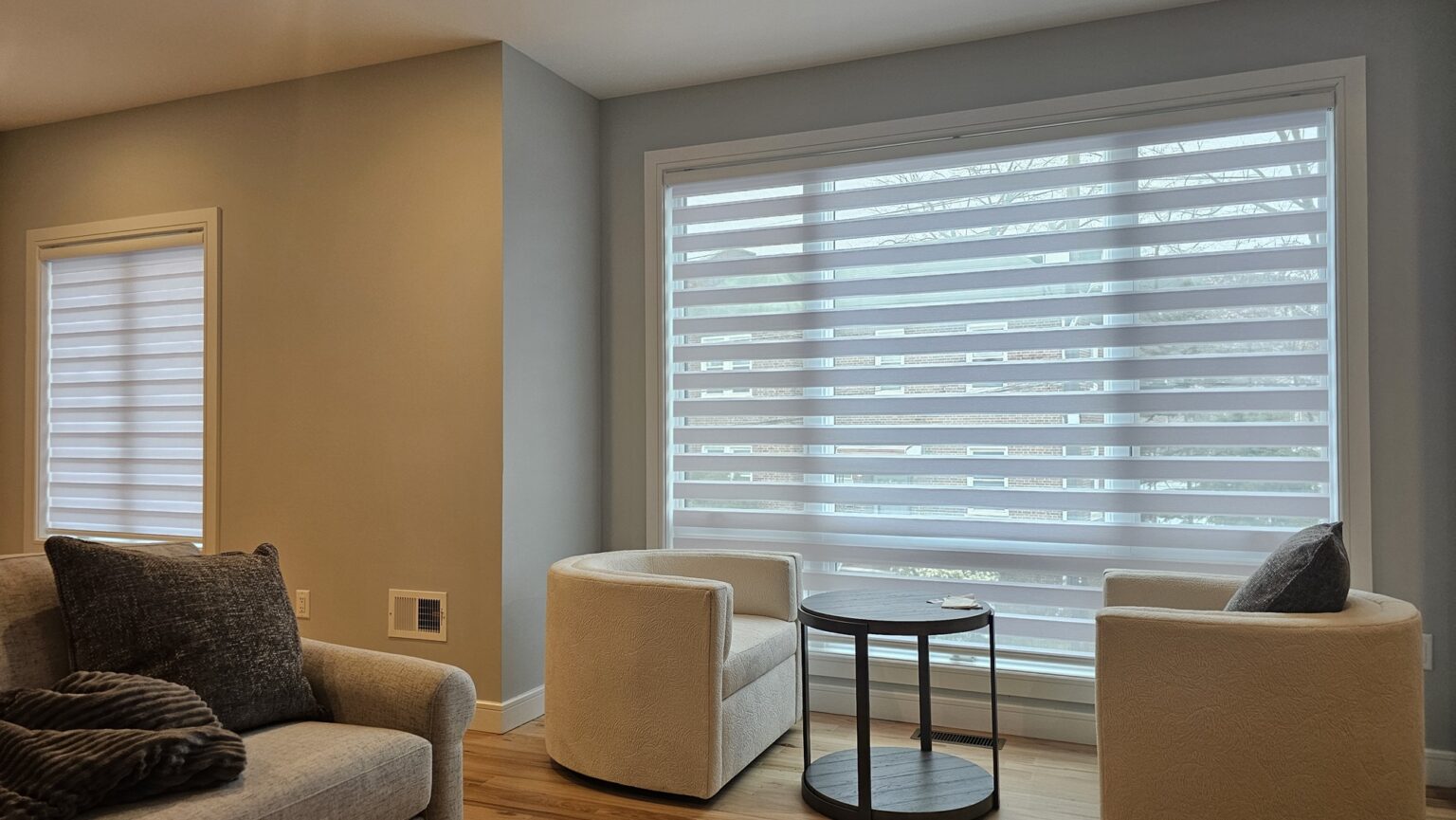
From our own installs in Bergen County

See the Folds in Person in Palisades Park
The Curtain is a family owned window treatment showroom, in business since 2007 at 545 Broad Ave in Palisades Park, New Jersey. Owner and designer Sejun Park works through fabric, fold and lining with you in person, not on a catalog page. Bring a photo of the window and a paint chip if you have one.
We measure in your home for free, put the quote in writing, and install what we sell. See finished rooms in our gallery, check the towns we cover on our service area page, or read about the showroom. Book at free consultation or call (201) 302-9111.