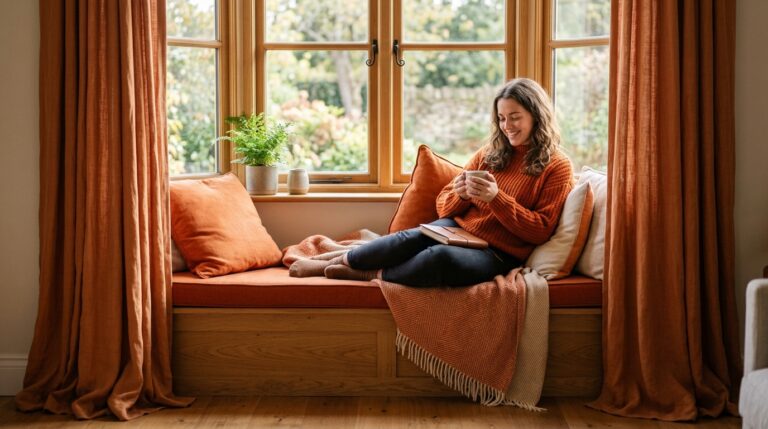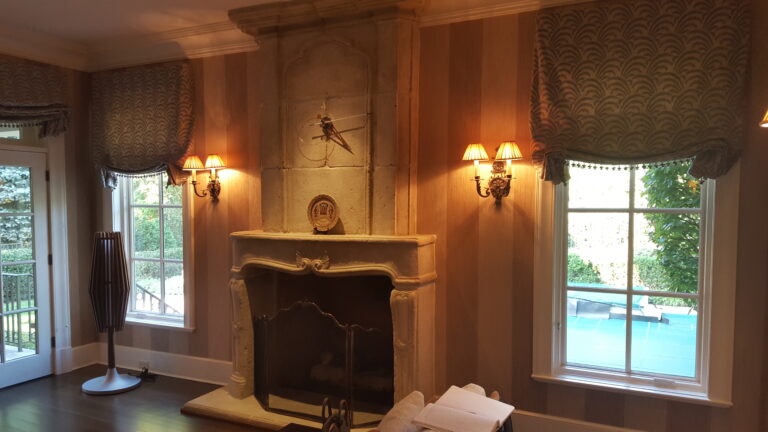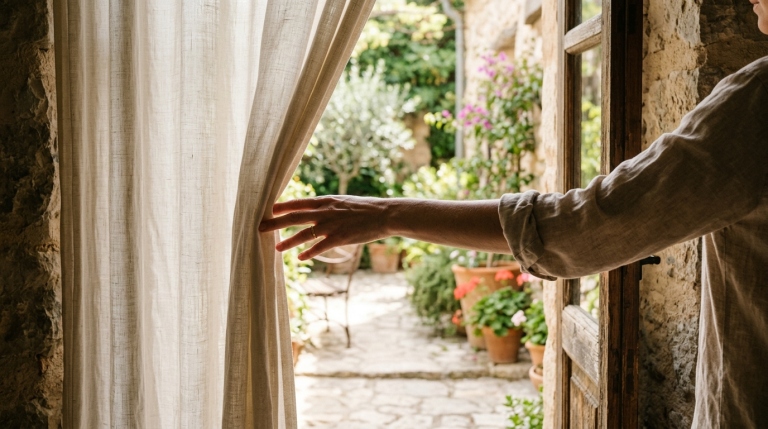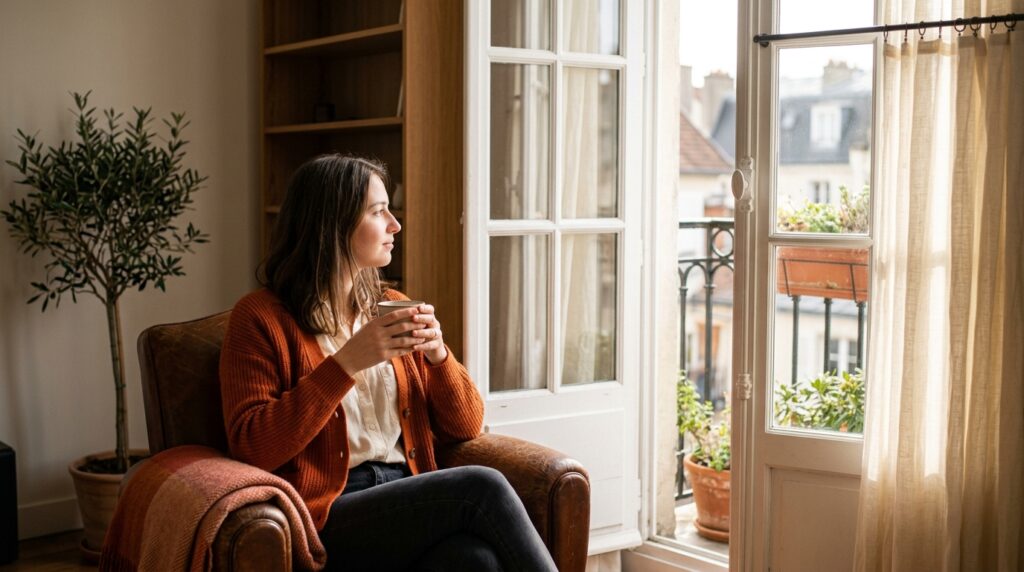
Glass panels flood your room with light, but they also turn your living space into a fishbowl once the sun goes down. You want privacy without sacrificing that gorgeous natural light. And you want a look that doesn’t scream “hardware store afterthought.” The right french door curtains solve both problems at once, blending function with genuine style. This guide walks you through every option, so you can choose with confidence.
Why French Doors Need a Different Window Treatment Approach
How French Doors Differ From Standard Windows
A standard window has a frame around most of the glass and stays put. French doors don’t play by those rules. They’re floor-to-ceiling glass, usually in a pair, and they swing open into the room. That means privacy and light control problems that regular curtains just weren’t built to solve. Cover them wrong and you’ll either block the doorway or leave gaps of exposed glass at night.
Hardware is the other headache. Rods have to sit high and wide enough to clear door handles, hinges, and the swing radius of the door itself. Mount too low or too tight and you’ll be catching fabric in the latch every time someone walks through. Anyone furnishing a home near the water or shore towns should also think about new jersey home window trends before settling on a style, since local humidity and light patterns affect fabric choice more than people expect.
Then there’s heat and UV. All that glass surface area means more heat loss in winter and more sun-bleaching in summer than a typical window ever sees. Furniture fades faster. Energy bills creep up. It’s simple physics, not bad luck.
Homes in towns like Fort Lee and Tenafly often have French doors opening onto patios, decks, or sunrooms, which only amplifies the exposure. More outdoor connection is great for living. It’s rougher on your floors and fabrics, though, so plan accordingly. If you’re outfitting a sunroom nook alongside the French doors, some of the same thinking behind curtains for small windows applies, since both spaces demand treatments that flex with tight sightlines and heavy daily use.
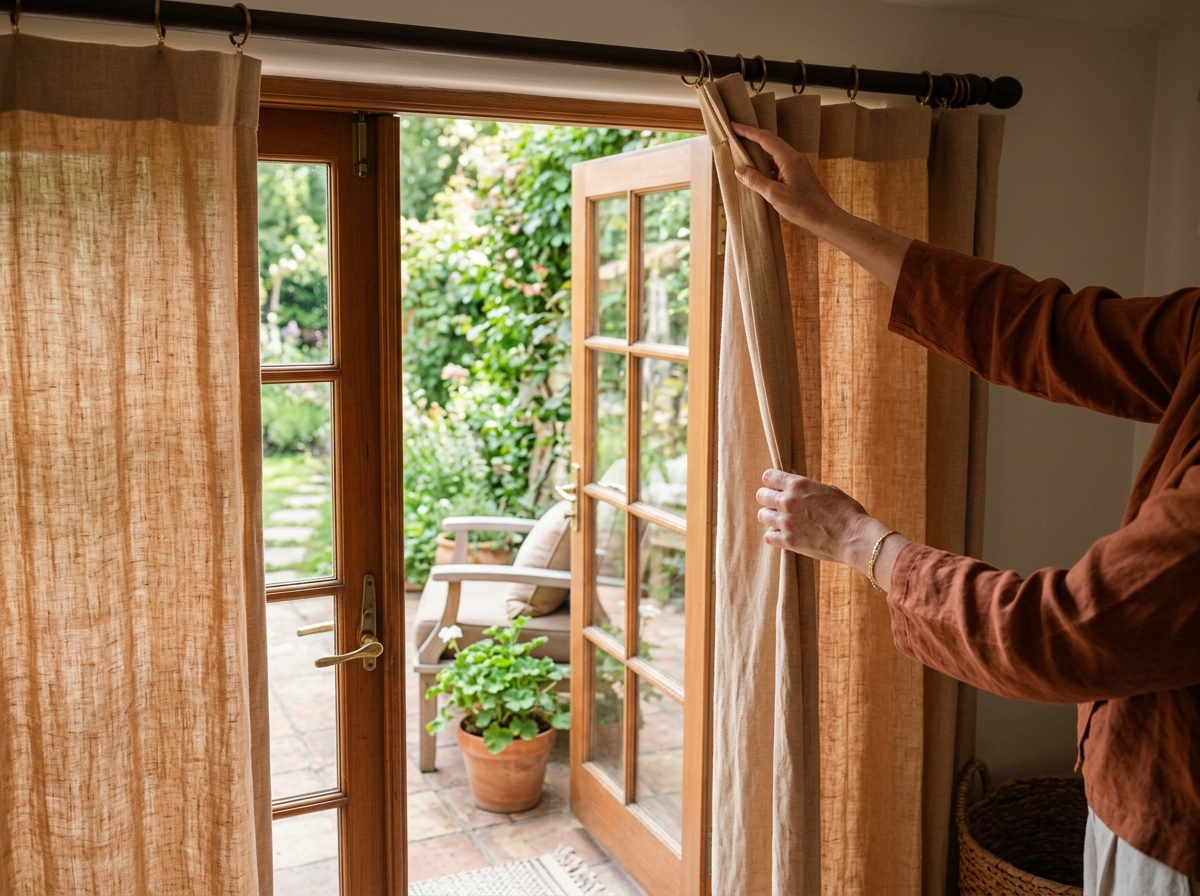
French Door Curtains vs. Blinds, Shades, and Shutters
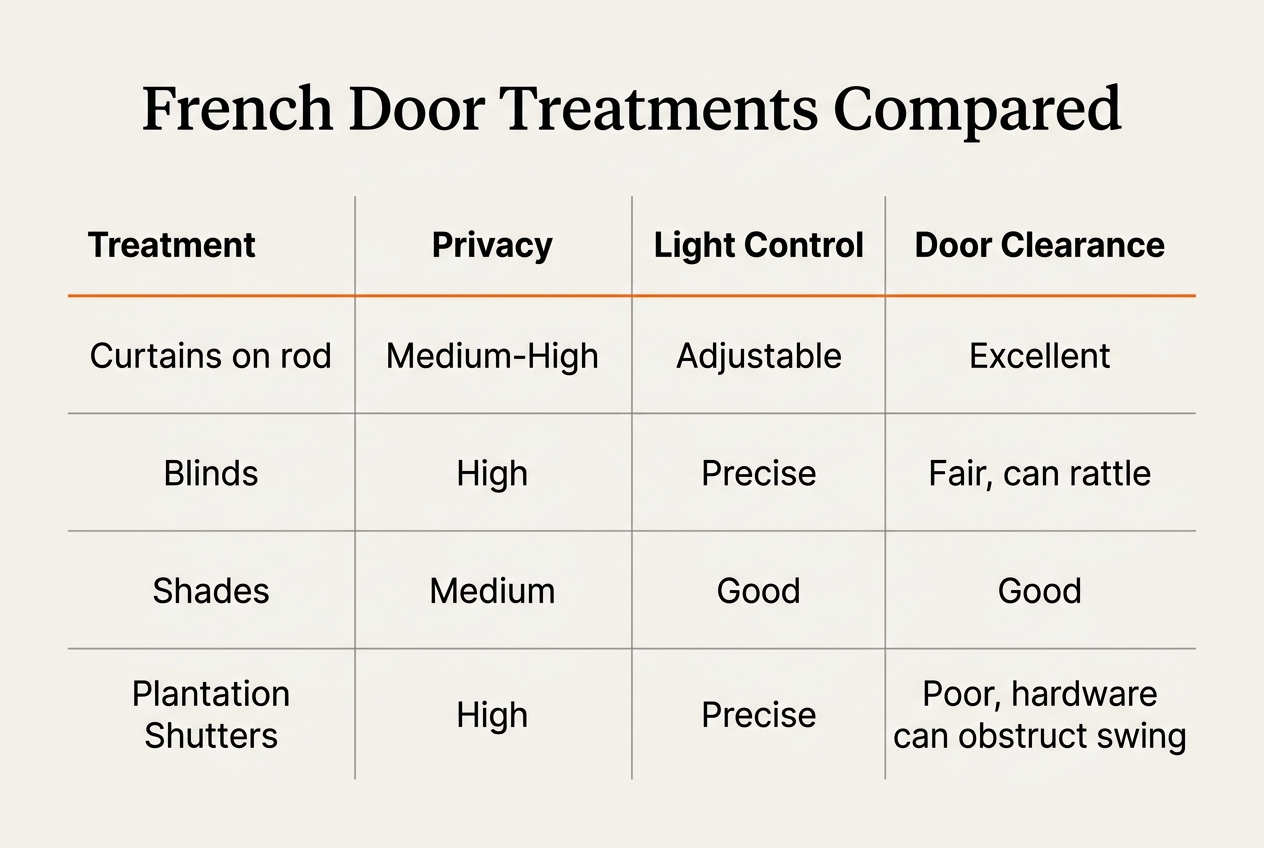
Every French door treatment has to earn its keep on the same five points: privacy, light control, insulation, ease of operation, and cost. Curtains, cellular shades, roller shades, and shutters each score differently, and knowing where they land helps you avoid buyer’s remorse. If you want the fuller picture on how these categories stack up beyond French doors specifically, covers curtains, shades, blinds, and drapes in more depth.
| Treatment | Privacy | Light Control | Insulation | Ease of Operation | Cost Range (per door) |
|---|---|---|---|---|---|
| Curtains | Moderate | Moderate | Moderate | Very easy, just pull aside | $60–$300 |
| Cellular Shades | High | High | Excellent | Easy, cordless lift options | $120–$400 |
| Roller Shades | High | High | Fair | Easy, one-handed operation | $90–$300 |
| Shutters | Very High | Very High | Good | Moderate, louvers need adjusting | $250–$700 |
Matching the Treatment to Door Usage
Doors you open and close constantly need something that gets out of the way fast. That’s where curtains win: a quick pull and you’re through, no hardware to fumble with. Shades and shutters, by contrast, offer tighter, more exact light control, useful for a home office or a bedroom-facing patio door, but they demand more precise handling every time you pass through. If total blackout or strict privacy matters more than quick access, shutters or cellular shades are the smarter pick. Curtains are the low-maintenance choice; shutters are the disciplined one.
When to Combine Two Treatments
Layering solves the tradeoff instead of forcing you to pick a side. Custom drapery paired with vertical blinds gives you soft framing plus a hard-light-control layer you can close fully at night. This combination also shows up often in room divider curtains setups, where fabric handles style and a firmer layer handles function. It’s a bit more to install and clean, sure, but for busy households it’s often the most practical answer.
Choosing the Right Fabric and Opacity
Sheer
Sheer fabric is the workhorse of daytime privacy on French doors. It softens harsh sunlight, blurs the view from outside, and still lets you see silhouettes of the yard or hallway beyond. Voile, batiste, and lightweight polyester blends are the usual go-tos, and they all move well on a rod without bunching up around door hardware.
What sheers won’t do is block anyone from seeing in once the lights come on at night. That’s the tradeoff. If your French doors face a busy street or a neighbor’s porch, pair sheers with a secondary layer for evening hours rather than relying on sheer fabric alone.
Semi-Sheer, and Blackout Explained
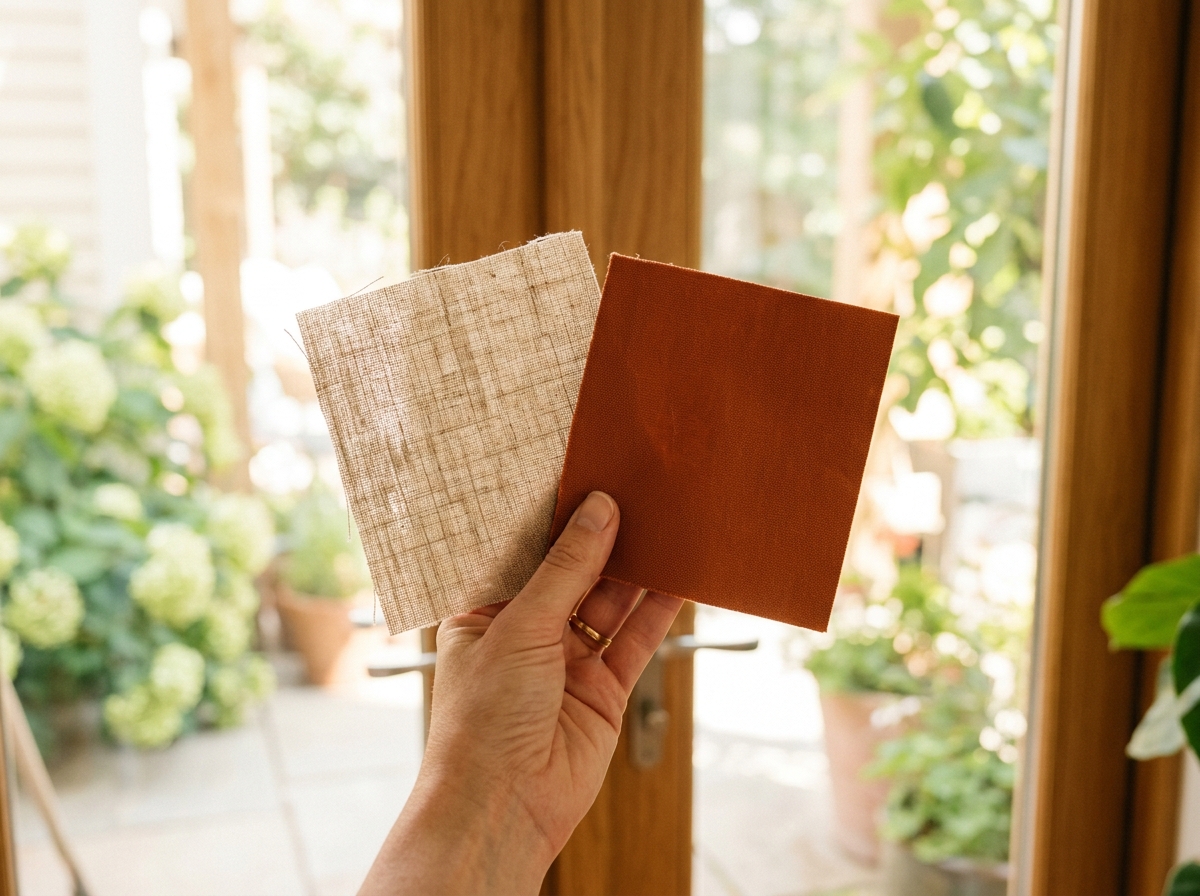
Mid-weight linen and cotton blends sit right between sheer and blackout, and honestly, they’re the most practical choice for everyday living spaces like a dining room or den. They filter light without turning the room dim, add some texture and warmth, and still let you layer in a blackout lining later if your needs change. Many homeowners browsing french door curtains ideas gravitate toward exactly this weight because it photographs well and wears well.
Blackout linings belong in bedrooms, nurseries, and media rooms where light control actually matters for sleep or screen glare. A quality blackout lining can cut incoming light by well over 90%, and it adds a bonus: better insulation against drafts near the door frame. Just know that stacking a blackout panel on hinged French doors takes careful hardware planning, since the fabric needs room to clear the swing without dragging.
Sheer shades like Silhouette and Pirouette are worth a look if fabric panels feel like too much upkeep. These have soft fabric vanes floating between two sheer facings, so you get adjustable light control without curtain rods, tiebacks, or trips to the dry cleaner. For a broader comparison of light and privacy performance across shade types, this rundown of top shades for privacy and light breaks down what works best room by room.
One more thing worth budgeting for: UV-resistant fabrics. Sun exposure through glass doors fades wood floors and upholstery faster than most people expect, sometimes within a year or two of daily direct light. Look for fabrics rated to block UV rays, not just visible light — the label should say so plainly, not just imply it.
Hardware and Mounting Options That Actually Work on French Doors
Rod-Mounted Panels
The hardware you pick matters more than the fabric on French doors. Get it wrong and you’ll be fighting your curtains every time someone walks through. There are two basic mounting approaches, and they behave very differently once the door starts swinging.
- Rods mounted above the door frame let panels hang freely and clear the glass, but they’ll sway and billow with every open and close, which some people find annoying near a busy entry.
- Tension rods mounted directly on the door itself move with the door as one unit, keeping fabric snug against the glass and out of the way of the swing path.
- Traverse rods allow side-pull operation with a cord or wand, so you never touch the fabric, which keeps panels cleaner and reduces wear near handles.
- Sash rods installed both top and bottom hold panels taut against the door on two points, a smart pick for doors that open and close dozens of times a day.
- Combination rigs, tension rod on the door plus a stationary side panel, give you privacy on the glass without sacrificing a softer look at the frame.
Track and Sash Systems
If you want French doors to disappear into the wall visually, ceiling-mounted tracks are the answer. They run floor to ceiling, hide the hardware, and give a clean, architectural line that rod pockets simply can’t match. If you’re patient and like a weekend project, a step-by-step guide to Simple French Door Curtains Easy DIY Tutorial walks through building a basic sash-rod setup with materials from a hardware store. For sliding glass doors paired with a French-style entry nearby, vertical blinds for sliding glass doors remain a low-fuss, low-maintenance option that won’t tangle or sag. And whichever hardware you choose, pairing it with breathable linen curtains keeps panels light enough that even a basic tension rod can support them without drooping.
Solving Common Comfort Problems With the Right Window Treatment
Noise, Temperature, and UV Concerns
French doors are basically big panes of glass with a lot of gaps around them, so they let in more than just light. Traffic noise, wind, and street chatter all sneak through easier here than at a regular window. Layering a heavier drapery panel over a cellular shade cuts down on sound by adding mass and trapping air between layers. That trapped air is also what makes insulating cellular shades so effective against temperature swings near glass doors, especially in older Bergen County homes where the glazing isn’t exactly state-of-the-art.
UV rays are the quiet damage-doer. They fade rugs, crack leather, and yellow wood finishes over years, often before you even notice it happening. Light-filtering linings and specialty coatings block a good chunk of that radiation while still letting daylight through, so you’re not sacrificing brightness for protection.
- Layered drapery paired with a cellular shade adds mass and dead air space, which is what actually blocks outside noise rather than just the fabric’s thickness alone.
- Insulating cellular shades trap air in honeycomb pockets, reducing drafts and heat transfer near the glass in both winter and summer.
- Light-filtering linings and UV-resistant coatings cut fading on floors, furniture, and artwork without turning the room dark.
- Sheer or woven shades diffuse sunlight and obscure the direct view inside, giving you privacy during the day without blocking light entirely.
- Combining a sheer layer with a room-darkening panel lets you switch between daytime privacy and nighttime blackout with one setup.
Getting Expert Input Before You Buy
Here’s the honest truth: most people guess wrong on fabric weight, opacity, and mounting until someone points out the trade-offs. That’s where a free in-home consultation earns its keep. A designer can look at your actual door, your sun exposure, and your noise source, then match a solution instead of you ordering online and hoping. If you’re weighing motorized convenience against a manual setup, reading up on how automated blinds compare to automated shades beforehand makes that consultation faster and more useful. Some homeowners also want to understand how roman shades stack up against curtains before committing to a style, and it’s a fair question since the two solve different problems. For a softer, more traditional look on the doors themselves, browsing a rod pocket style made for French doors can help you picture how panel fullness and length actually work on a swinging door. None of this needs to be a guessing game. The session is free, it’s local, and it usually saves you from an expensive redo.
french door curtains: Styles, Lengths, and Design Tips for a Polished Look
Length and Header Style Choices
Floor-length panels are the classic choice, and for good reason. They pool gently at the floor or hover just above it, giving a formal, tailored look that suits living rooms and dining areas. If you want that elegant, hotel-lobby feel, this is your route. Just be sure the panels can slide freely without dragging on the door hardware when it opens.
Café-style curtains take the opposite approach. They cover only the bottom half of the door, so light still pours in up top while you get privacy where it matters. This style works especially well in kitchens and breakfast nooks facing a backyard or patio, where you want a view of the sky but not a direct sightline into your space from a neighbor’s yard.
Header style changes how curtains actually move, which matters a lot on a door you open daily. Tab-top panels look casual but tend to stick and bunch when pulled across. Grommet tops glide smoothly and hang in even folds, making them the better pick for doors in regular use. Rod-pocket headers sit in between: they look soft and traditional but need a firm push to slide, so they’re best on doors you rarely open. Anyone drafting a full door curtains guide for their own home should weigh function over looks here.
Coordinating With Existing Window Treatments
If the room already has wooden blinds or shutters, don’t fight them. Pick a curtain fabric that echoes the wood tone or trim color, then let pattern do the talking. A subtle stripe or a textured linen next to plain white shutters reads as intentional, not mismatched. Busy florals against busy slats, though, will just look noisy.
Texture matters as much as pattern. Pairing a nubby woven curtain with sleek metal blinds creates contrast that feels designed on purpose. Smooth sateen panels next to painted wood shutters do the same thing, softening a room that might otherwise feel too hard-edged. For those hunting a coordinated set already built for this exact door style, browsing Custom Made Double Pocket French Door Curtains can shortcut a lot of the guesswork on proportion and hardware.
Seasonal swaps keep things fresh without a full redesign. Swap heavier cotton or velvet panels for linen or sheer voile come spring, and shift your palette from deep burgundy or forest green toward soft blues and creams. It’s a small change. It makes a bigger difference than people expect.
Motorization, Maintenance, and Getting Professional Help
Automating Your French Door Curtains
French doors get opened, closed, and fussed with more than almost any other window in the house. That’s exactly why motorization makes sense here. PowerView automation lets you schedule curtains or shades to open at sunrise and close at dusk, all without you touching a cord or panel. If your doors sit behind a couch, a dining table, or somewhere you’re constantly walking past with full hands, motorized control turns an annoying daily chore into a non-event. There’s currently a free smart hub motorized shades may promotion worth asking about if you’re leaning toward automation anyway.
Motorized options aren’t just a novelty. For hard-to-reach transoms above French doors, or doors used dozens of times a day by kids and pets, remote or app-based control genuinely reduces wear on hardware. Fewer hands pulling cords means fewer repairs down the line.
When to Call in a Professional
Routine care keeps fabric panels and sheer shades looking sharp: vacuum with a brush attachment monthly, spot-clean spills immediately, and avoid harsh detergents on delicate weaves. But some issues need a trained eye. The table below breaks down common problems and whether a DIY fix or a professional visit makes sense.
| Issue | DIY Fix? | Professional Needed? | Typical Cause |
|---|---|---|---|
| Dusty fabric panels | Yes, vacuum or shake out | No | Everyday household dust |
| Sticking sliding track | Sometimes, light lubricant | Often | Debris or bent track |
| Frayed lift cords | No | Yes | Age and repeated use |
| Motor not responding | No | Yes | Battery, wiring, or hub issue |
| Stained sheer shades | Rarely | Yes | Deep-set spills or sun damage |
If you’re shopping around for panel styles before booking anyone, browsing a curated collection of French Door Curtains can help you settle on fabric and length before a technician even shows up. When cords fray or motorized components stall, that’s not a weekend project. Free in-home design consultations are available throughout Bergen County, including Ridgewood, Englewood, and Franklin Lakes, and they’re a low-pressure way to get a second opinion on repairs versus replacement. Honestly, guessing at motor wiring yourself is a bad idea. Call (201) 302-9111 and let someone who does this daily take a look instead.
If your French doors deserve a treatment as beautiful as the view through them, the team at The Curtain would love to help you find it. Since 2007, this family-owned business has been guiding Bergen County homeowners through exactly these decisions, and a free in-home consultation with their expert designers takes the guesswork out of choosing the right fabric, fit, and function for your doors. Stop by their Palisades Park, NJ showroom or call (201) 302-9111 to book your visit today.