You want window coverings that look sharp, control sunlight on your terms, and hold up for years without fuss. Louvered shutters promise all three, but picking between materials, louver sizes, and mounting styles can get confusing fast. Not every option suits every window. This guide breaks down exactly what to consider so you choose a fit you’ll be happy with for the long haul.
What Are Louvered Shutters and Why Homeowners Choose Them
Interior vs. exterior louvered shutters explained
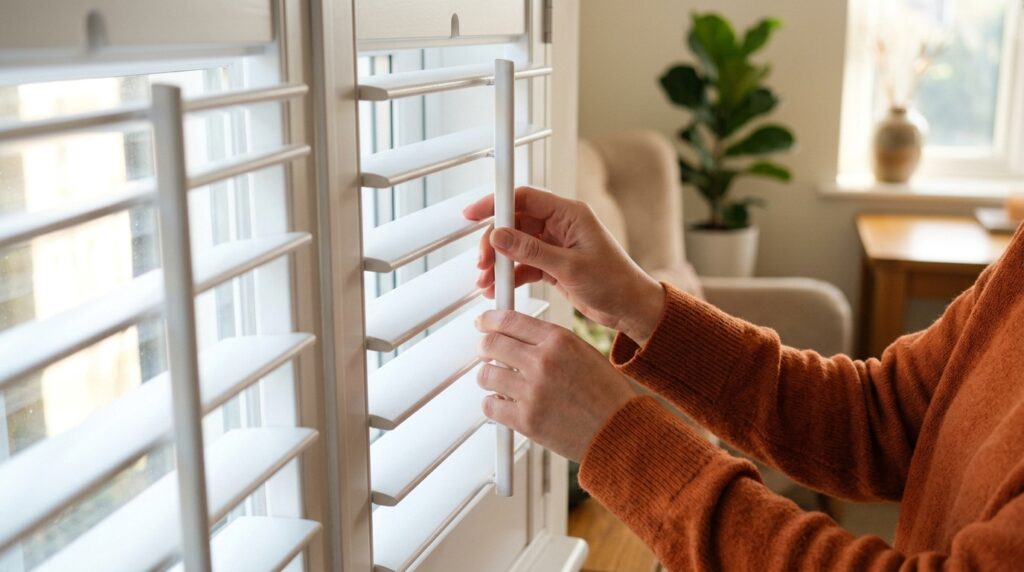
Louvered shutters are solid-frame window coverings built around a set of angled slats, called louvers, that tilt open or closed with a rod or a hidden tilt mechanism. Tilt them one way and you get full daylight with privacy still intact. Tilt them the other way and the room goes nearly dark. It’s that simple, and that’s the whole appeal.
Here’s where people get confused: shutters come in two very different families. Interior plantation-style shutters mount inside the window frame or as a surface-mounted panel, usually made of wood or a wood-composite, with louvers running anywhere from 2.5 to 4.5 inches wide. Exterior shutters, by contrast, are mounted on the outside facade, often flanking the window rather than covering it, and they’re chosen for curb appeal or, in some styles, storm resistance. One is a functional light-control tool you operate daily. The other is largely architectural dressing, sometimes decorative only, sometimes rated for wind and impact.
Interior louvered shutters earn their reputation on three fronts: clean lines, long-term durability, and the kind of precise light control fabric treatments can’t quite match. A roller shade either blocks light or it doesn’t; a shutter lets you dial in a 15-degree gap for airflow without losing privacy. If you’re weighing options for an arched or angled opening, a consultation on how to hang curtains on arched window spaces shows just how much harder soft treatments work to fit shapes shutters handle naturally with custom-cut panels.
To be clear about scope: everything in this guide concerns interior shutters built for windows inside the home. We’re not covering exterior decorative shutters mounted on siding, nor storm or impact-rated shutters built for hurricane protection. Those are separate products, separate materials, and frankly a separate contractor’s job. Keeping that distinction straight will save you a confusing call to the wrong supplier.
Interior Louvered Shutters vs. Other Window Treatments
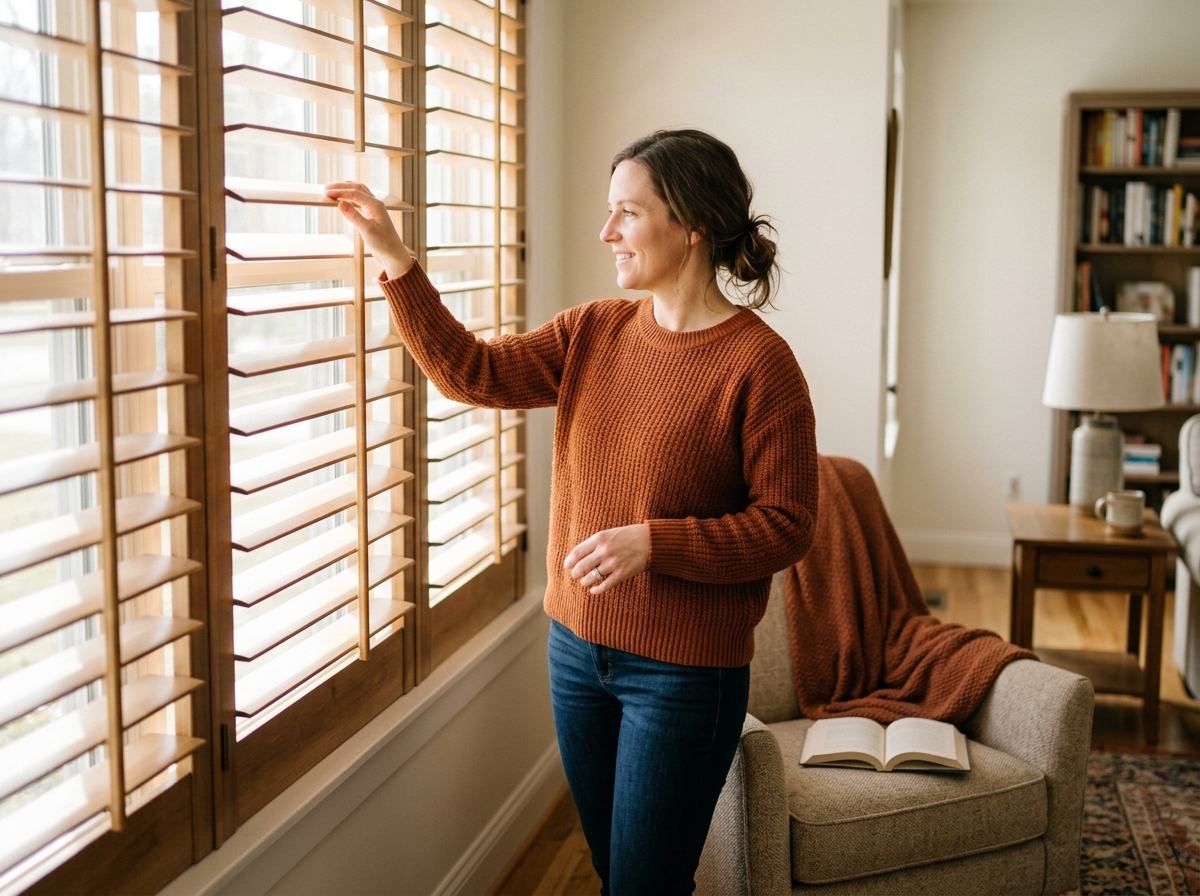
Shutters give you a fixed, architectural look. They’re built into the window frame and stay that way for decades. Shades and blinds, on the other hand, give you room to play with fabric texture, color, and seasonal updates. If you like to refresh a room every few years, that flexibility matters. If you want something that reads as permanent trim rather than a textile, shutters win that argument every time.
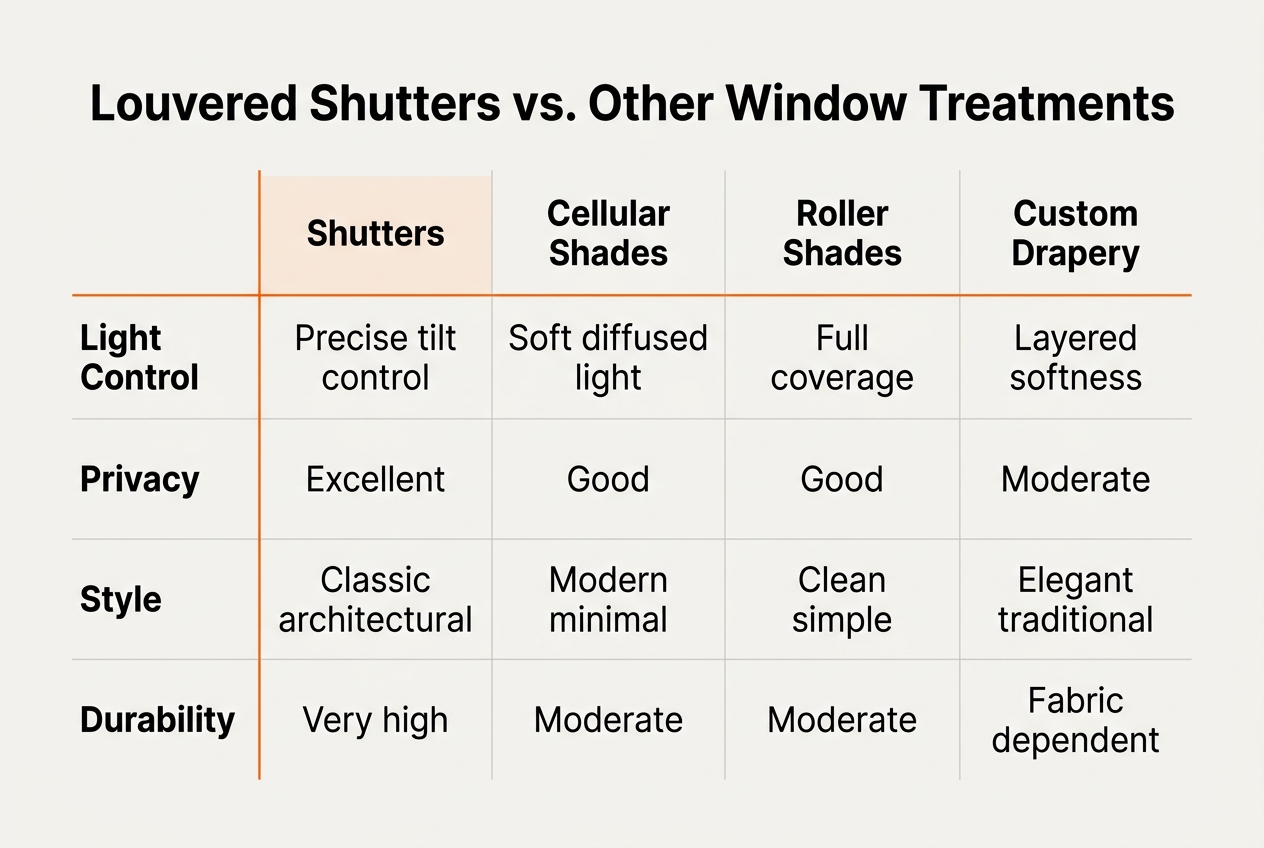
Here’s where the comparison gets practical. Light control, insulation, privacy, and price don’t move together, so what wins on one often loses on another.
| Treatment | Light Control | Insulation Value | Privacy | Typical Price Tier |
|---|---|---|---|---|
| Louvered Shutters | Excellent, adjustable louvers | Moderate | Excellent | Higher |
| Cellular Shades | Good to excellent | Best in class | Good | Mid-range |
| Wooden Blinds | Very good | Moderate | Very good | Mid to higher |
| Roller Shades | Good, depends on fabric | Low to moderate | Fair to good | Lower to mid-range |
Cellular shades are the clear winner on energy performance. Their honeycomb pockets trap air, and that’s a structural advantage shutters simply can’t copy. For a drafty room, that’s often the smarter first move, and it’s far cheaper than replacing a window. Shutters, though, take the prize on durability; solid wood louvers don’t sag, fade unevenly, or need fabric replaced after a decade of sun exposure. Roller shades are the budget-friendly option and work well for quick UV control, especially solar fabrics, though they offer less insulation than a cellular design. Wooden blinds sit in the middle, offering good adjustability without the fixed commitment shutters require. Worth noting, too: certain window treatments can boost resale value, and shutters often get named specifically because appraisers see them as a built-in feature rather than decor. There’s no single right answer here. It depends on whether you’re chasing energy savings, long-term durability, or just a specific look.
Choosing the Right Louvers: Size, Material, and Finish
Matching louver size to room function
Louver size changes how a room looks and functions more than most people expect. Smaller slats, around 2.5 inches, give you a tighter grid and more precise light control, which works well in smaller windows or traditional-style rooms. Go up to 3.5 inches and you get a nice middle ground: decent view-through when open, solid privacy when closed. At 4.5 inches, you’re maximizing the view and letting in more light with fewer louvers to obstruct it, a look that reads modern and suits larger windows especially well.
- Bedrooms often do best with 2.5 or 3.5 inch louvers since tighter control over light and privacy matters more than an open view.
- Living rooms and dens with large picture windows usually look better with 4.5 inch louvers, which let the window feel open rather than slatted.
- Kitchens tend to favor 3.5 inch louvers, a size that balances easy wiping with enough adjustability over sink-area glare.
- Home offices benefit from mid-size louvers too, since you want to cut screen glare without blocking the view entirely.
- Narrow or oddly proportioned windows often look best with smaller louvers, which keep the panel from feeling too chunky for the frame.
Material choices for humid rooms like kitchens and baths
Material matters just as much as size, maybe more. Solid wood louvers look and feel premium, but they’re heavier, pricier, and can warp if a bathroom runs steamy for years. Wood composite splits the difference: it mimics the look of real wood, costs less, and holds up better where humidity swings. Vinyl is the budget and moisture champion, nearly impervious to water, which makes it a smart pick for bathrooms, laundry rooms, or anywhere steam collects daily.
Finish is where shutters either blend in or stand out. Paint finishes work well for a crisp, trim-matching look, especially in white or off-white rooms, while stained finishes bring out wood grain and pair naturally with hardwood floors or stained furniture. If you’re coordinating shutters with other treatments in the home, it helps to think the same way you would when choosing and installing custom draperies, matching undertones and sheen rather than picking finishes in isolation. For specialty shapes, arches, angled tops, odd corners, standard panels just won’t work. Those windows need custom-fit louvered panels built to the exact curve or angle, which is a measuring job best left to an in-home consultation rather than a DIY guess.

Solving Common Window Problems with Louvered Shutters
When shutters help with heat and glare, and when they don’t
Outside noise is a common complaint, especially near busy roads or close-set homes. Solid-core shutters, which are denser than their open-grain cousins, do a decent job blocking mid-range sound when the louvers are closed tight. But shutters alone won’t silence a loud street. Pair them with a layered treatment, like drapery or a cellular shade behind the panel, and you get a real reduction. If noise is your top concern, it’s worth reading up on noise reducing window treatments before you decide which combination fits your room.
UV damage is another frequent worry. Sunlight fades rugs, art, and furniture faster than most people expect, sometimes within a single season of south-facing exposure. Shutters with adjustable louvers help by redirecting light up toward the ceiling instead of letting it pour straight onto your sofa. Light-filtering shades do something similar, softening and scattering rays rather than blocking them outright. Window film is a permanent option too, but that’s glass-level work done by a film installer, not something we handle here. It’s worth knowing the difference: film is fixed once applied, while shades and shutters stay adjustable for as long as you own the window.
Glare is a slightly different problem than heat, though people often lump them together. If you’re trying to watch TV at 4pm without squinting, adjustable louvers or a light-filtering shade will solve it instantly, no permanent change to the window needed. Film is fixed once it’s applied. Shutters and shades give you a dial you can turn up or down depending on the hour, the season, or just your mood that day.
Drafts, temperature swings, and what shutters can and can’t fix
Drafty rooms and swinging indoor temperatures usually get blamed on bad windows, and sometimes that’s fair. But before anyone jumps to window replacement, it makes sense to try a lower-cost step first. Insulating cellular shades, built with honeycomb pockets that trap air, can noticeably calm a cold room in winter and a hot one in summer. They’re far cheaper than new windows and install in a day, not weeks.
That said, cellular shades won’t fix a window with a failed seal or a single pane losing heat constantly. If you’ve tried insulating treatments and still feel a steady draft near the frame, that’s a sign to call a window contractor and have the glass itself evaluated. No shade or shutter can compensate for a window that’s physically letting air through its structure.
Shutters do contribute to insulation, but the mechanism is different from cellular shades. A well-fitted shutter frame, sitting flush against the window opening with minimal gap, creates a buffer of still air between the glass and the room. Loose, poorly measured frames lose that benefit almost entirely. This is really a math and craftsmanship problem: tight tolerances mean real performance, while sloppy fitting means the shutter is mostly decorative. If you’re weighing softness and drape alongside structure, a sheer curtains guide can help you compare how airy fabrics behave next to a solid louvered frame in the same room.
Interior Shutters vs. Exterior and Storm Shutters: Avoiding Confusion
Let’s clear up a mix-up that trips up a lot of homeowners. Interior plantation-style louvered shutters are built for light control, privacy, and a clean look inside the room. That’s it. They’re a window treatment, not a hardened barrier. The louvers tilt open and shut with a simple wand or tilt rod, and the frame mounts right against your interior casing. None of that has anything to do with wind resistance or impact protection, no matter how sturdy the wood or vinyl feels in your hand.
Hurricane or storm shutters live in a completely different category. These are wind-rated, code-tested exterior products, usually aluminum or polycarbonate panels, installed on the outside of the house by a licensed exterior contractor who pulls permits and meets local building codes. Decorative shutters bolted to the siding on either side of a window are also a separate job entirely, more about curb appeal than function, and that work falls to a siding or exterior contractor, not whoever handles your interior treatments. If you’re weighing energy performance alongside appearance, it helps to review a broader guide to energy efficient window coverings before you decide what each layer of your window actually needs to do.
So never assume your interior shutters add security or storm protection, even the solid-core hardwood ones. That’s simply not their job. If high winds or break-in resistance are the concern, talk to a specialist who handles exterior-rated systems; for everyday light, privacy, and insulation, interior louvers remain one of the better choices around, and pairing that decision with sound design process of custom window treatments planning keeps the two goals from getting tangled. Broader comfort questions, like how your HVAC system handles seasonal swings, are worth researching separately through sources such as guidance on new construction AC installation.
Installation, Fit, and Safety Considerations
Fit is everything with louvered shutters. Unlike a roller shade you can trim on site, shutter panels and louvers are built to exact frame dimensions, which means custom measuring isn’t optional. Bay windows need angled end panels that meet cleanly at the corners. Arches require a template traced from the actual curve, not a guess based on a tape measure. Sliding glass doors bring their own headache, since the panels have to track smoothly without scraping the frame or binding on the floor. Get the measurements wrong and you’re looking at gaps that leak light and draft, or louvers that won’t close flush.
Cordless and motorized upgrades for child safety
Dangling cords have long been a flagged hazard in homes with young kids or curious pets, and the industry has moved hard toward eliminating them. Cordless lift systems and app-controlled motorization, such as PowerView, let you raise, lower, or tilt louvers without a single pull cord in sight. That matters more than style preference for a lot of households. A few points worth weighing before you upgrade:
- Cordless shutters and blinds remove the strangulation risk that comes with traditional pull cords and looped chains, which matters most in nurseries, playrooms, and anywhere pets roam freely.
- Motorized louver control through a remote or smartphone app lets you adjust light and privacy without walking across the room, a real plus for hard-to-reach windows above stairs or sinks.
- Battery-powered motorization is often retrofittable, so older shutters may not need a full teardown just to go cordless.
- Scheduling features let shutters open at sunrise and close at dusk automatically, which adds a security-adjacent benefit even though it’s not a true security feature.
- Cordless doesn’t mean cheap; expect a price bump over standard manual systems, though many families decide the safety upgrade is worth it.
One clarification that trips people up: security bars and window guards are a completely separate product category from shutters, built to resist forced entry, not to filter light or improve privacy. Don’t buy louvered shutters expecting break-in protection, and don’t buy security bars expecting them to look like a design feature. If break-ins are the worry, that’s a conversation for a locksmith or security contractor, not a window treatment consultation. It’s also worth noting the Global Window Shutters Industry Assessment, 2020-2025 tracked rising demand for exactly these safer, cordless mechanisms as households prioritized child and pet safety alongside style.
Finally, sliding glass doors deserve a special mention. Shutters can work on them, but the panel weight and track clearance often make them impractical for wide or frequently used doors. That’s why so many homeowners researching vertical blinds for sliding glass doors end up choosing them instead: they stack neatly to one side, handle wide spans without sagging, and cost less to replace if a vane gets damaged.
Planning Your Louvered Shutters Project: Consultation, Cost, and Care
What a design consultation covers step-by-step
A free in-home design consultation exists to match louver size, material, and finish to how each room actually gets used. A sun-drenched kitchen window calls for different specs than a bedroom where privacy at night matters more than daytime light. The designer measures, discusses light direction, and shows samples on-site so you’re not guessing from a swatch under store lighting.
One thing worth clarifying: this is window treatment design, not full-room styling. If you’re picking paint colors, rearranging furniture, or need a cohesive design scheme for a whole room, that’s the territory of an interior decorator, a separate service entirely. The consultation stays focused on shutters, fabric, and light control decisions tied directly to the windows themselves.
From measurement to installation day
Most projects follow a predictable sequence, though timelines shift depending on custom finishes or order backlogs. The table below lays out what typically happens at each stage, so you know what to expect before committing.
| Step | What Happens | Typical Timeframe |
|---|---|---|
| In-home consultation | Designer measures windows, reviews louver and finish options | 45–90 minutes |
| Quote and order | Final specs confirmed, materials ordered from manufacturer | Same day to 1 week |
| Manufacturing | Shutters built to custom window dimensions | 3–6 weeks |
| Installation | Frames mounted, panels hung, hardware tested | Half-day to full day |
| Follow-up check | Tilt rods and hinges inspected for smooth operation | Within 1–2 weeks |
Repair, cleaning, and seasonal cost factors
Once shutters are installed, two different needs can come up later: mechanical repair and surface cleaning. Repair services handle broken tilt rods, worn hinges, or a cracked louver, mechanical issues that affect how the shutter opens and closes. Cleaning dust or buildup off the slats is a different job, best handled by a dedicated cleaning specialist rather than a repair technician. Keeping that distinction straight saves you a wasted call. As for budgeting, seasonal promotions on select product lines can meaningfully lower upfront cost, so it’s worth asking what’s currently discounted before you lock in a quote; if you’re weighing manual versus motorized options, reading up on how motorized shades compare to manual ones can help clarify which fits your budget and routine. Demand for shutters has grown steadily too, and industry data tracking the broader shutters market by product type gives useful context on why pricing and lead times vary by material and finish.
Living with louvered shutters day to day is mostly about enjoying what drew you to them in the first place: the clean lines, the adjustable light, the way they soften a room without ever feeling fussy. If something’s not sitting right, whether a louver’s sticking or a panel’s not latching the way it used to, that’s worth looking into before it becomes a bigger annoyance, and The Curtain’s repair and consultation services are built for exactly that kind of question. Taking a little time now to get it checked out means you get back to simply enjoying the shutters, rather than working around them.