Bamboo shades keep showing up in design feeds, and they keep showing up in Bergen County dining rooms and living rooms too. They also get sold as bamboo venetian blinds, matchstick blinds and woven wood shades, so the shopping gets confusing before you have measured a single window. Here are the pros and cons of bamboo shades from a Palisades Park showroom that measures and installs them, including how a natural weave behaves through a humid New Jersey July and on a south-facing window in January.
Bamboo Shades, Bamboo Venetian Blinds and Woven Wood: Same Product, Different Labels
All three names describe thin strips of bamboo, reed, grass or jute stitched together with fine cord and lifted on a roll or a fold. Listings often say bamboo venetian blinds, but they do not tilt the way a real venetian blind does. They stack, like a roman shade made from a natural material. In a showroom you will hear them called woven wood shades, and that is what you are looking at on our floor. If you are worried the look has aged out, we answered that in are woven wood shades out of style.
The Pros of Bamboo Shades
Texture on a wall that has none
Flat drywall and a white window frame give the eye nothing to hold. A woven shade adds grain and shadow at the one spot in the room everyone already looks at. In a builder-grade Bergen County living room, that single change usually does more than new paint.
Light that lands soft
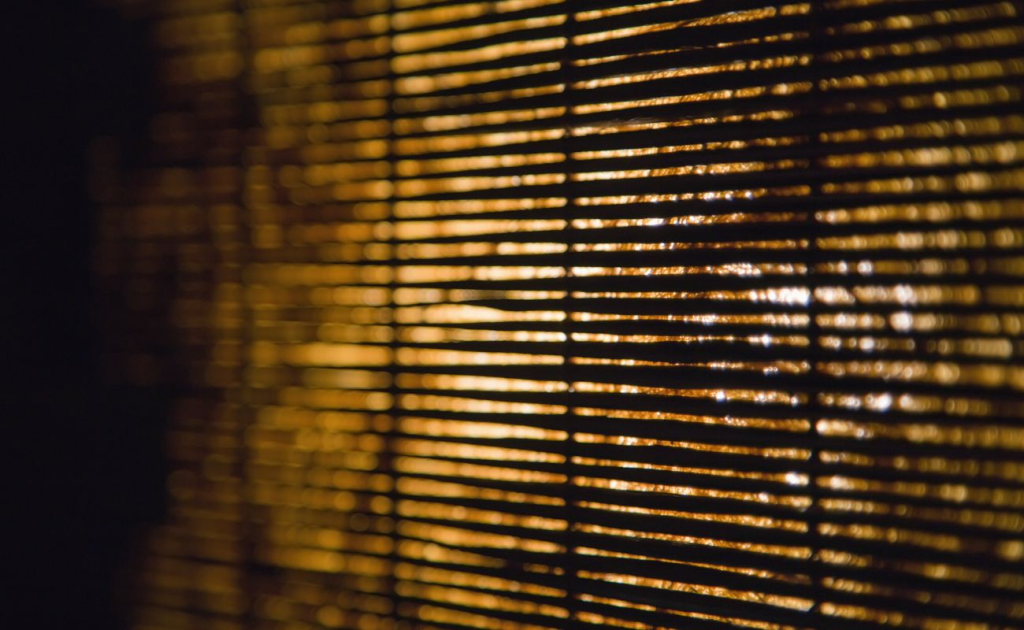
The weave breaks direct sun into a dappled, filtered light instead of a hard rectangle on the floor. You keep a usable amount of daylight and still cut the glare on a television or a laptop screen. How much light gets through depends on how tight the weave is, which is the first thing to check when you handle a sample.
A thin layer of insulation
The weave traps a slim pocket of air at the glass. It is not the sealed air pocket you get from a honeycomb cell, so treat it as a small help rather than the reason to buy. If a drafty window is the actual problem, compare it against cellular shades before you decide.
Light weight and a renewable material
Woven wood is light for its size, so brackets stay small and the headrail stays shallow on a wide window. Bamboo also grows fast and regrows from the same root system after cutting, which is the sustainability argument for it.
They can be made to fit awkward windows
Custom widths and heights, liner choices, edge binding and cordless or motorized lifts are all order options. That flexibility is what makes the material workable on a bay window or a run of large windows where stock sizes never line up.
The Cons of Bamboo Shades
Privacy ends at sundown
An unlined weave that feels private at 2 p.m. shows silhouettes at 9 p.m. with the lamps on. Hold a sample up to a lit bulb in a dark room before you commit, and read can people see through my blinds if the window faces a street or a neighbor’s driveway.
Not blackout, even with a liner
A room-darkening liner takes most of the light, but pinholes still show at the stitch lines and light still washes in around the edges of the shade. Light sleepers should plan on layered drapery or a separate blackout shade rather than expecting the weave to do it.
Steam and standing moisture
Constant humidity can loosen the glue and warp thin reeds. A powder room with a fan is usually fine. A full bath where somebody showers twice a day is not the place for a natural weave, and the alternatives are covered in bathroom window treatments.
Fade on the sunny side
Direct sun bleaches darker stains faster than light honey tones. South and west windows take the worst of it, and a room where a shade sits half raised for months will show a line at the fold.
Dust settles in the weave
Every horizontal strip is a small shelf. A pass with a vacuum brush every week or two handles it, but if dust is a health issue in your house, a smooth roller shade wipes clean in a fraction of the time.
Natural color variation
Two shades in the same weave ordered months apart can read differently, because the raw material is not dyed to a single flat color. Order every window in a room at the same time so the panels come from the same run.
What Bergen County Weather Does to a Natural Weave
Our summers are humid and our winters are dry and heated, so a natural shade goes through a real swing twice a year. Reed and grass take on moisture in August and give it back once the heat comes on, and that movement is exactly what a cheap, loosely stitched weave cannot handle. A tightly woven shade with a stable backing rides it out. This is the main reason we push people away from the thin ready-made matchstick blinds for a window they care about.
Sun exposure is the other local factor worth walking through room by room. A north-facing window in a Bergen County colonial is a safe home for a dark stain. An unshaded west-facing living room window over a driveway gets hours of low afternoon sun in summer plus snow glare in winter, and that is where a lighter natural tone hides the fade you will eventually get. When we come out to measure, exposure is one of the first things we write down.
Fixes That Keep the Look and Solve the Problem
- Privacy liner. A liner stitched to the back of the shade keeps the woven face on the room side and blocks the sightline. It adds cost and a little bulk to the stack.
- Layered drapery. Leave the weave unlined for daytime light and hang lined panels on either side to close at night. This is the most common thing we build for a front-facing living room, and the mechanics are in how to layer curtains.
- Cordless or motorized lift. Loose cords are the one real hazard on this product with kids and cats in the house. Cordless spring lifts and motors solve it and clean up the look. See child safe window treatments.
- Faux woven for wet rooms. A PVC-coated weave reads as natural from a few feet away and shrugs off steam. Same idea as choosing faux over real in faux wood vs wood blinds.
Natural Style That Fits Most Decor
Part of why this material lasts is that it does not commit the room to a style. A pale, open weave against white walls reads Scandinavian. The same shade over a walnut dining table and a linen chair reads warm and traditional. An espresso stain inside black steel or black-framed windows reads modern. Because the color sits in the neutral range with the browns and greens, it also survives a furniture change, which a bold patterned fabric does not.
Two pairings we build often in Bergen County homes: woven wood inside the frame with floor-length drapery just outside it, so the window looks taller than it is, and a woven wood panel track across a sliding door that stacks to one side instead of gathering in the middle. You can see finished rooms in the gallery.
Five Checks Before You Order
- Check the weave against a lamp at night, not just against daylight in the store.
- Decide on the liner before you order, because adding one later means a new shade.
- For an inside mount, measure the width at three heights and use the smallest number, rounded down to the nearest 1/8 inch. More on that in how to measure for blinds.
- Check that the frame is deep enough for the roll to clear the window lock and the crank on a casement window.
- Order every window in a room at once so the natural color runs match.
What we would put on the window
- Living room facing the streetUnlined woven wood for daytime, with lined drapery panels on both sides to close after dark.
- BedroomSkip the bare weave. Blackout honeycomb on the window, woven wood or drapery in front of it for the look.
- Full bath with a daily showerPVC-coated faux woven, not natural reed.
- Kitchen window away from the rangeNatural weave with a cordless lift so nothing hangs over the counter.
- Sliding door to the deckA woven wood panel track that stacks to one side and clears the handle.
From our own installs in Bergen County
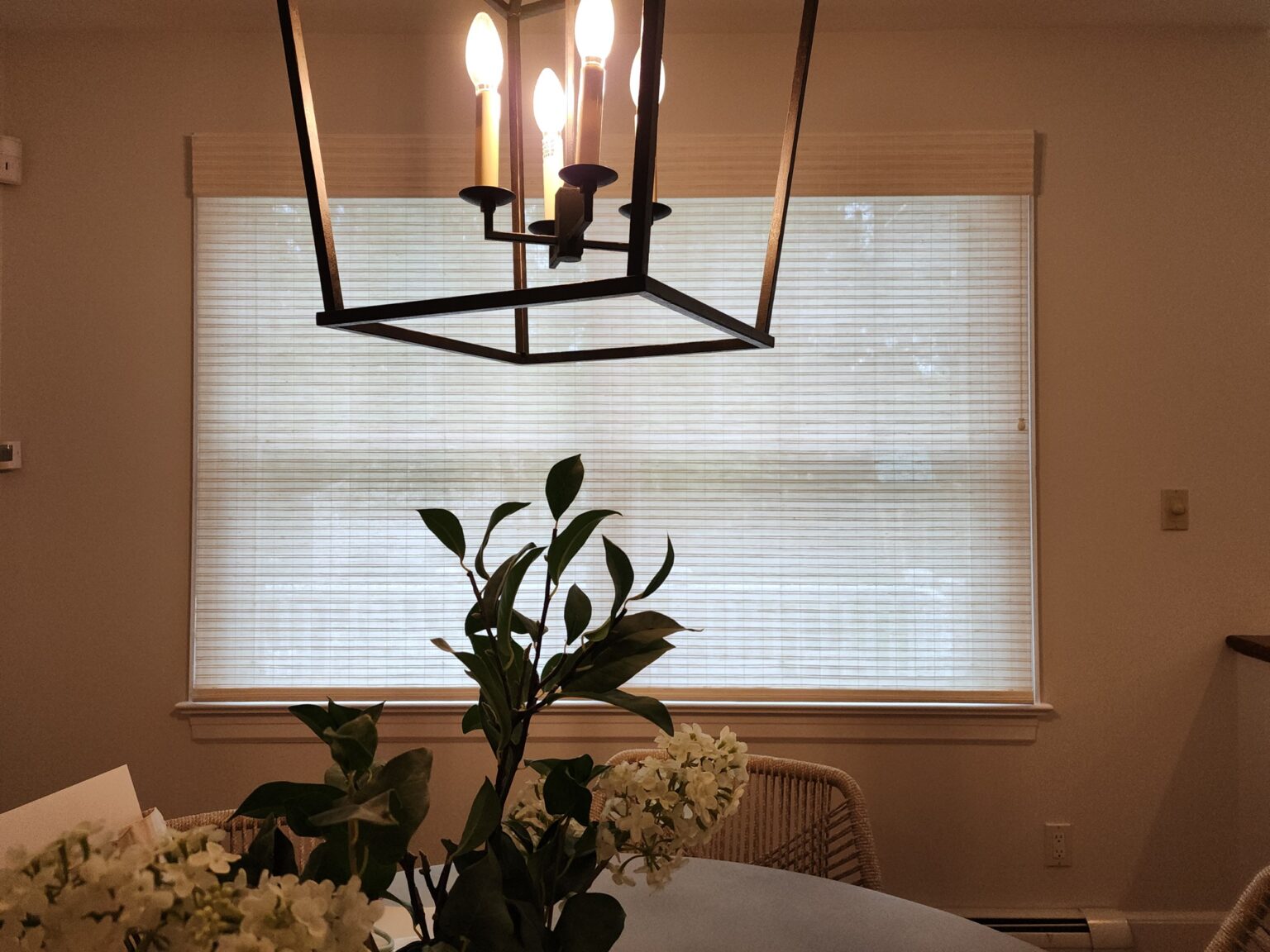
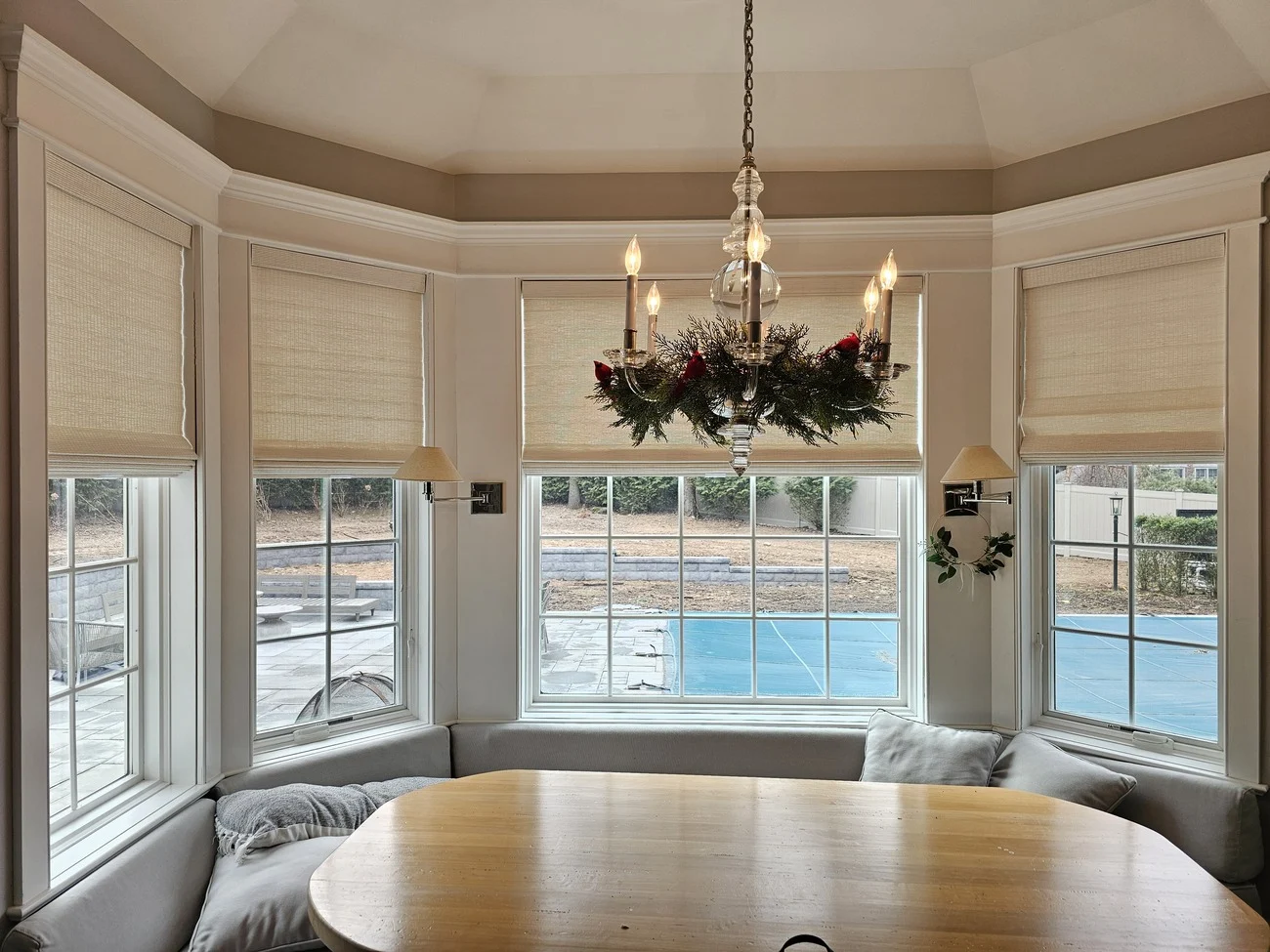
Handle the Weaves at Our Palisades Park Showroom
Photographs flatten this material. A weave that looks tight on a screen can be open enough to see through in person, and a stain that looks warm online can go orange next to your floor. The Curtain has been a family-owned window treatment showroom since 2007 at 545 Broad Ave in Palisades Park, and owner and designer Sejun Park will pull the woven wood samples next to the drapery fabrics so you can judge the two together.
We measure in your home for free and put the quote in writing, and we sell and install Hunter Douglas shades, blinds and shutters plus custom drapery. Browse the full range of shades and window treatments, check the towns on our service area page, or call (201) 302-9111. If you already have woven shades that will not lift straight, we also handle repairs. Ready to see samples in your own light? Book a free consultation.