Standing in a showroom or scrolling endless online listings, choosing the right bedroom curtains can feel harder than it should be. Fabric weights, lining options, and blackout ratings all compete for your attention while your budget and deadline tick away. Pick wrong and you get restless nights disrupted by early morning light or street noise—or worse, curtains that clash with a room you worked hard to design. This guide cuts through the noise. It walks you through what actually matters in 2026: the materials, mounting styles, and light-control features that separate curtains that merely hang from those that genuinely transform how you sleep and live in your space.
How to Choose Bedroom Curtains for Your Space
Assessing Light Control and Privacy Needs
Bedrooms need tighter light control than living rooms or kitchens. You sleep here. Morning sun, streetlights, and nosy neighbors all affect your rest. Start by asking how dark you actually need the room. Shift workers and light sleepers often need near-total blackout coverage. Others just want a soft filter.
Privacy matters too, especially on ground floors or homes close to the street. Think about sightlines from outside at night, when interior lights turn windows into mirrors. A layered approach usually works best—pair a sheer layer with a heavier panel.
Insulation is another factor people forget. Thick, tightly woven fabrics block drafts in winter and heat in summer, which can lower your energy bills. Not sure curtains alone will do the job? This guide on blinds vs curtains choosing the right window treatment breaks down the tradeoffs clearly.
Matching Curtains to Room Size and Window Shape
Small bedrooms need curtains that don’t overwhelm the space. Lighter fabrics and higher rod placement—around 4 to 6 inches above the frame—make ceilings feel taller. Bulky, heavily layered treatments can shrink a small room visually, even when they perform well functionally.
Window shape changes your options too. Bay windows need flexible or curved rods. Tall, narrow windows look better with panels that run nearly floor to ceiling, adding height. Wide windows often need two separate rods, or a wider single track, to keep the fabric from sagging.
Standard-size panels work fine for typical windows, but odd dimensions usually call for custom lengths. Measure accurately before buying. Otherwise you end up with panels that hover awkwardly above the floor or drag and collect dust.
Setting a Budget for Custom vs Ready-Made Panels
Ready-made panels are the budget-friendly choice, typically $30 to $100 per panel. They work well for standard windows and simple aesthetic goals. Custom panels cost more—often $150 to $400 or higher per window—but offer precise sizing, fabric choice, and lining options.
Think about how long you plan to stay in the home, and how particular you are about fit and finish. A dedicated provider can help you weigh these tradeoffs during an in-home consultation. Many local businesses also share pricing breakdowns and comparisons on their blog, worth a look before you settle on a budget.
Popular Fabric Types and Their Benefits
Fabric choice shapes how a room feels, sounds, and sleeps. For a deeper breakdown, the best fabrics for curtains material pros and cons covers weight, texture, and cost side by side. Here’s a quick comparison of the three most common fabric families.
| Fabric Type | Light Filtering | Drape Quality | Maintenance Level |
|---|---|---|---|
| Cotton-Linen Blend | Moderate | Soft, casual folds | Easy, machine washable |
| Velvet | Near blackout | Full, structured | Dry clean recommended |
| Sheer Polyester | Minimal, diffuses light | Airy, flowing | Low, gentle wash cycle |
| Heavyweight Wool Blend | High | Dense, formal | Professional cleaning |
Cotton and Linen Blends
These blends offer a natural, relaxed texture. They fold softly and filter light without blocking it fully. Wrinkling is common, so steaming keeps them looking crisp.
Velvet and Heavyweight Fabrics
Velvet adds weight and insulation. Thick fibers block more light and dampen outside noise. These fabrics need careful cleaning, or the pile crushes.
Sheer and Lightweight Materials
Sheers create a soft, glowing effect while preserving privacy at a distance. They’re lightweight, budget-friendly, and easy to refresh. Check how to wash curtains before laundering, so you don’t damage delicate weaves.
Blackout Curtains vs Sheer and Light-Filtering Options
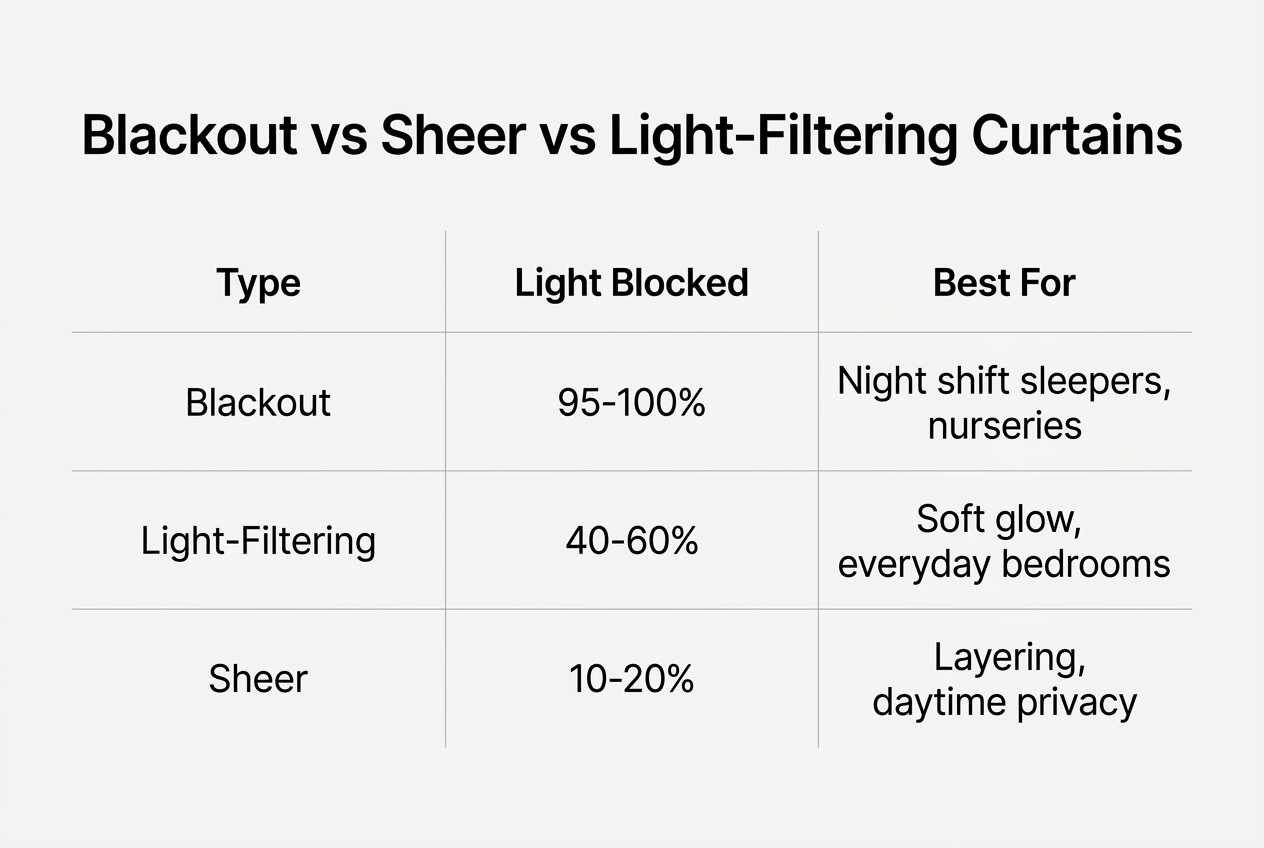
Light control sits at the center of every bedroom window decision. Some sleepers need total darkness. Others prefer a soft glow in the morning. Comparing fabric categories side by side makes the trade-offs clear.
| Fabric Type | Light Blocked | Best For | Bonus Benefit |
|---|---|---|---|
| Blackout | 95-100% | Shift workers, nurseries, east-facing rooms | Insulates against heat and cold |
| Sheer | 10-20% | Daytime privacy, formal layering | Softens harsh sunlight |
| Semi-sheer | 30-50% | Guest rooms, north-facing windows | Balances privacy and glow |
| Light-filtering | 60-80% | General bedrooms, city apartments | Reduces street noise slightly |
When Blackout Panels Make Sense
Blackout fabric works best for anyone sensitive to early sunrise or streetlights. It supports deeper, uninterrupted sleep. Many families researching the benefits of blackout curtains discover added energy savings, since the dense weave blocks heat transfer through glass year-round.
Benefits of Sheer and Semi-Sheer Layers
Sheer panels invite gentle daylight while keeping privacy intact. They suit rooms where waking naturally matters more than total darkness, like guest suites or sunrooms converted into bedrooms.
Combining Layers for Flexible Light Control
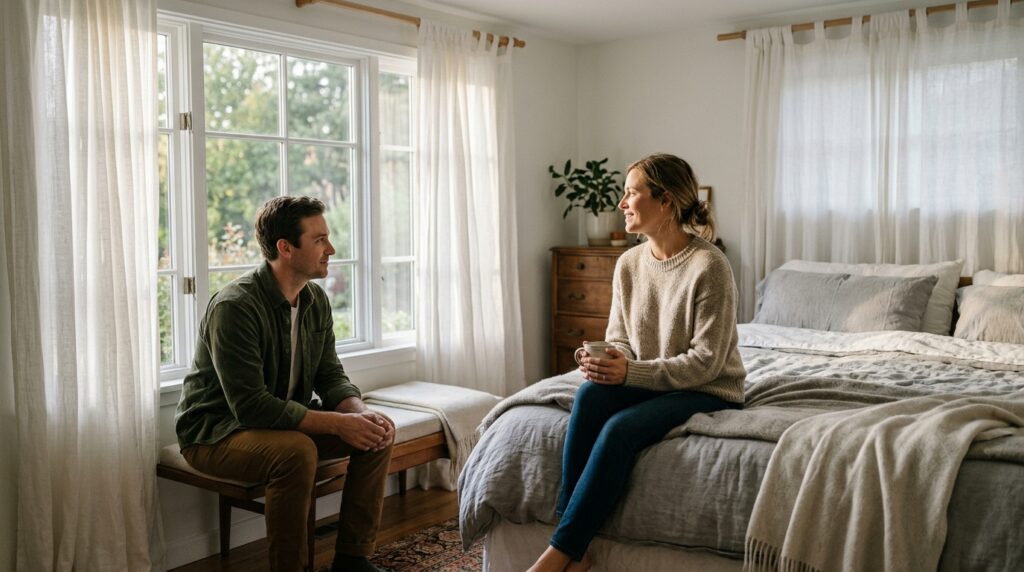
Pairing a sheer layer with a blackout panel gives sleepers full control. Open the sheer for morning light. Close the blackout for weekend rest. Exploring Custom Bedroom Curtains & Drapes can help you match fabric weights for this layered approach.
Choosing Colors and Patterns for a Restful Bedroom
Neutral and Calming Palettes
Color affects mood more than most people realize. Soft blues lower heart rate and ease anxiety. Warm greiges and dusty greens feel grounding. Blush and oatmeal tones create a soft, restful glow. These shades work because they skip the visual noise right before sleep. Choosing a calming palette is one of the simplest ways to make a bedroom feel like a retreat.
Coordination matters as much as color choice. Curtains should echo a tone already present in the bedding or wall paint, rather than matching it exactly. A linen curtain in soft sand can pull warmth from a beige duvet without looking flat. For guidance on pairing shades correctly, this resource on how to match curtains with your homes color scheme offers practical direction anyone can use at home.
Bold Patterns and Statement Prints
Pattern can add energy, but scale is critical. Large florals or wide stripes suit spacious rooms with high ceilings. In a small bedroom, oversized prints can overwhelm the space. A smaller, tighter pattern keeps proportions balanced. This rule of pattern scale gets overlooked often.
Bold prints work best as a single focal point. Pair a patterned curtain with solid bedding to avoid visual clutter. A navy geometric print, for instance, pairs nicely with plain white or gray linens.
Country and Traditional Styles for a Cozy Feel
Classic plaids, ticking stripes, and small floral sprigs bring warmth to traditional bedrooms. These patterns feel timeless rather than trendy. They suit rooms with wood furniture, wrought iron beds, or vintage-inspired decor.
Layering texture adds coziness without adding visual weight. A cotton gingham curtain over a linen liner feels soft and inviting. Anyone exploring options can browse curated collections like Curtains For Bedroom: Stylish Window Treatments At … for inspiration on classic country styling.
Curtain Styles and Header Options Explained
Grommet and Rod Pocket Panels
Grommet panels have metal rings sewn into the top. They slide easily along a rod and create clean, uniform folds. Rod pocket panels use a sewn-in sleeve instead, giving a softer, gathered look. Rod pockets sit closer to the rod, which can limit how easily they glide if you open and close curtains often.
Pleated and Tailored Headers
Pleated headers bring a formal, tailored feel to a bedroom. Pinch pleats, goblet pleats, and box pleats each create different fold widths and shadow patterns. These styles usually need drapery hooks or rings attached to a traverse rod. That adds installation steps, but delivers a polished, custom finish worth the extra effort.
Tab Top and Tie Top Styles
Tab top and tie top styles offer a relaxed, casual look. Fabric loops or ties wrap directly around the rod, so movement is limited compared to gliding grommets. Before deciding, weigh these practical points:
- Grommet panels suit rods up to about 1.5 inches thick and allow the smoothest daily operation.
- Rod pocket styles work best on stationary panels that rarely need to open or close.
- Pleated headers pair well with heavier fabrics and decorative traverse rods for a structured drape.
- Tab and tie tops show more rod, so choosing an attractive rod finish matters.
- Lighter headers pair nicely with layering ideas, and diy curtain hacks transform your space with simple upgrades for budget-friendly updates.
Ready-made options like Curtains & Drapes – Affordable & Modern can help you compare header styles before committing to custom panels.
Measuring Your Windows for a Perfect Fit
Measuring Width for Proper Fullness
Getting width right matters more than most people think. Curtains without enough fullness look flat and skimpy, no matter how nice the fabric is. A good rule: measure your window’s width, then multiply by two to two and a half times. This creates soft folds when the panels are closed.
- Measure the width of the window frame, not just the glass, to capture the full opening.
- Add extra inches on each side if you plan to mount rods beyond the frame for a wider look.
- Round up to the nearest standard panel size unless you are ordering a custom width.
- Double-check measurements at the top, middle, and bottom, since older frames are rarely perfectly square.
Measuring Length and Mounting Height
Length affects how formal or casual a room feels. Floor-length panels that just skim the floor look tailored. Puddled or too-short curtains often look like a mistake rather than a style choice. Mount rods four to six inches above the frame, and measure straight down to your chosen ending point, whether that’s the floor or the windowsill.
Accounting for Furniture and Wall Space
Before finalizing any order, check the space around the window. Furniture, nightstands, and light switches can all get in the way of panel movement. Reviewing options for Bedroom Curtains ahead of time helps you picture how panels will hang once installed. Standard sizes work for many rooms, but oddly shaped windows often need custom orders. If you’re weighing the investment, understanding typical custom curtains costs can help you budget realistically before committing to a size or style.

Hardware, Rods, and Layering Techniques
Choosing the Right Curtain Rod
A rod must match the fabric it carries. Heavy velvet or lined drapery needs a sturdy steel rod, at least one inch in diameter, with brackets anchored into wall studs. Lightweight linen or sheer panels can hang from thinner rods without sagging. Always check the weight rating before buying.
Style matters too. A slim rod with simple finials suits modern bedrooms, while decorative wood or wrought-iron designs add character to traditional spaces. Double rods let you layer sheers under heavier panels, a practical option covered more in the next section. Want ready-made panels sized for standard rods? This guide to Curtains for Bedroom – Custom Colors & Sizes shows common size ranges.
Combining Drapery with Shutters or Shades
Layering adds both function and texture. Pairing curtains with cellular shades or plantation shutters gives you privacy control without sacrificing softness. Shutters handle daytime light and airflow, while drapery adds warmth and blocks light at night.
This combination also improves insulation. A layered window traps air between treatments, cutting drafts in winter and heat gain in summer. Many homeowners choose a light filtering shade behind blackout curtains for flexible control throughout the day.
Motorization for Convenience and Style
Motorized hardware has become affordable and reliable. Smart rods and tracks let you open or close curtains with a remote, app, or voice command—useful for hard-to-reach windows or shared bedrooms. Programmable schedules can align curtains with sunrise and sunset automatically.
Before choosing a system, compare options carefully. This comparison of automated blinds vs automated shades which smart window t… explains which motorized style fits different bedroom layouts and budgets best.
Custom Bedroom Curtains: Design and Installation Process
Scheduling an In-Home Design Consultation
Most custom projects start with a phone call or online form. A design consultant then visits your home at a time that works for you. This first step matters, because bedrooms have unique light, privacy, and style needs. Many local businesses offer this visit at no charge.
During the visit, the consultant looks at your windows, your furniture, and your daily routines. They ask about sleep habits and morning light. This helps them recommend the right fit before showing any fabric books. The consultation sets the direction for everything that follows in the design process of custom window treatments.
Selecting Fabrics, Colors, and Hardware
Once your needs are clear, the consultant brings real fabric swatches into your bedroom. Seeing samples under your actual lighting matters. A gray that looks cool in a showroom can look warm under your lamps at night. This step avoids costly guessing.
In-home selection also allows accurate measuring on the spot. The consultant checks window width, height, and depth, often within an eighth of an inch. They also review rod styles, mounting brackets, and motorization options. For inspiration, many homeowners browse collections like Bedroom Curtains & Blackout Bed Room Drapes before finalizing choices. Final decisions are usually locked in during this same visit, typically within 60 to 90 minutes.
Professional Installation and Final Adjustments
After ordering, custom curtains typically take three to six weeks to arrive, depending on fabric and hardware. Once ready, a scheduled installer visits your home, usually finishing a bedroom in under two hours. They mount hardware securely and check for level alignment.
The installer also tests function, making sure panels open, close, and stack properly. Small adjustments, like trimming length or repositioning brackets, happen on-site. This final step ensures a precise, lasting fit for your bedroom windows.
Seasonal Care and Maintenance Tips
Washing and Dry Cleaning Guidelines
Every fabric has its own care rules. Check the label first—guessing can ruin delicate weaves. For more background on matching fabric to your room’s needs, this how to choose curtains guide expert tips for every room covers the basics well.
- Cotton and linen panels usually tolerate gentle machine washing in cold water on a delicate cycle.
- Velvet and silk almost always require professional dry cleaning to avoid crushing the pile or watermarking the fibers.
- Polyester blends can often be spot-cleaned with mild soap and a soft cloth between full washes.
- Blackout linings should be vacuumed with a brush attachment monthly to remove dust buildup.
- Ironing should always use a low heat setting, with a pressing cloth placed between the iron and fabric.
Protecting Fabric from Sun Exposure
Sunlight fades color and weakens fibers over time. UV protection matters most for south-facing bedrooms. Rotating panels occasionally helps spread wear evenly across the fabric.
Adjusting Curtains for Winter and Summer
Seasonal swaps improve comfort and cut energy costs. Heavier drapes trap warmth in winter, while lighter panels boost airflow in summer. Many homeowners layer sheers under thermal panels for year-round flexibility. For inspiration on combining styles seasonally, see 35 Master Bedroom Curtains That Make a Statement. A dedicated provider can recommend fabric pairings suited to your climate and window orientation.
Common Mistakes to Avoid When Selecting Window Treatments
Hanging Curtains Too Low or Too Narrow
One of the most common errors is mounting the rod right above the window frame. This makes ceilings look shorter and windows look smaller. A better rule: hang the rod 4 to 6 inches above the frame, or closer to the ceiling in rooms with 8-foot ceilings. This creates height and drama.
Width matters just as much. Panels should extend 3 to 6 inches beyond each side of the frame. This lets curtains fully clear the glass when open, letting in maximum light. Skimpy, narrow panels look like an afterthought instead of a finished design element.
Choosing Fabric That Doesn’t Suit the Room’s Purpose
Style alone should never drive fabric choice. A sheer linen might look elegant in photos, but it fails a bedroom that needs darkness for sleep. Think about how the room functions first, then choose fabric weight that supports that need.
Lighting exposure matters too. East-facing bedrooms get harsh morning sun, while north-facing rooms stay dim year-round. Heavy fabrics can trap heat in sunny rooms, while thin fabrics won’t block glare in bright ones. Fading is another overlooked issue. Sun exposure can damage furniture, flooring, and fabric over time, so it helps to protect your furniture with the right window treatments before damage sets in.
Skipping Professional Measurements
DIY measuring often leads to gaps, sagging, or panels that hang unevenly. Windows are rarely perfectly square, especially in older homes. A small miscalculation can throw off the entire look.
Many local businesses offer measurement services for this exact reason. Getting it right the first time saves money and avoids reordering custom panels. Precise numbers also ensure proper light control and full coverage at night.
Before you commit to a fix, it helps to be clear about which problem you’re actually solving: if the glass itself has failed — fogging between panes, cracked seals, or drafts that no covering can stop — that’s a conversation for a glazier or window contractor first, and no amount of fabric will change the outcome. If, on the other hand, the real complaint is glare on the screen at three in the afternoon, faded upholstery, or rooms that feel too hot in summer and too cold in winter, adjustable interior treatments like solar roller shades or insulating cellular shades often handle it for a fraction of the cost, with the advantage that you can change your mind by simply raising them. Worth asking yourself, too, how much control you want day to day — permanent film on the glass is one setting forever, while a shade lets the same window behave differently at breakfast than it does at sunset.