Custom curtains cost more than a pair of ready-made panels, and the reason sits in four numbers: the fabric you choose, the finished width, the lining behind it, and the labor to sew and hang it. If you have been pricing drapery online and getting answers that swing from $300 to $2,500 for the same window, that spread is real. Here is what actually moves the number, written from a window treatment showroom on Broad Avenue in Palisades Park that measures Bergen County windows and puts every quote in writing.
Short answer
Custom drapery usually lands between $300 and $2,500 per window. Basic work runs $300 to $1,000, mid-range runs $1,000 to $2,500, and heavily detailed work goes above that. Fabric and finished width move the price more than any other choice, and the only figure that means anything for your house comes from a measured quote.
What custom curtains cost, and where the money goes
A quote for custom drapery is really four quotes stacked together. Change any one of them and the total moves, sometimes by hundreds of dollars on a single window. Knowing which lever you are pulling is the difference between cutting the price and cutting the part you actually wanted.
Fabric is the biggest lever
Fabric is sold by the yard, and you buy more yards than the window seems to need. Silk and brocade sit at the top of the range. Velvet and jacquard sit just below them. Cotton, linen blends and polyester sit lower and still hang well when they are lined properly.
Pattern costs extra beyond the price per yard. A printed or woven repeat has to line up across every panel in the room, so the workroom cuts additional fabric to match it. Before you fall for a print, ask how large the repeat is. A big repeat on a wide window can add a surprising amount of yardage.
Width and length decide how much fabric you buy
Drapery is not priced by the window, it is priced by the finished width. Panels that hang dead flat use roughly the width of the rod. Pleated panels are typically made at two to two and a half times the rod width so they stack in soft folds instead of pulling tight, which means a 100 inch rod can call for 200 to 250 inches of finished fabric.
Length works the same way. Floor length panels cost more than sill length ones, and a panel that puddles on the floor costs more than one that clears it by half an inch. If you are undecided, our guide on whether curtains should touch the floor covers where to land the hem. Tall windows, bay windows and large windows add width and height at the same time, which is why they sit at the top of most quotes.
Lining changes the price and the performance
Unlined panels are the cheapest thing a workroom can make, and they are the first thing people regret. Lining gives a panel body so it hangs in even folds, protects the face fabric from sun fade, and adds real function.
- Standard lining: body, better drape, and some protection for the face fabric.
- Blackout lining: the darkest option for bedrooms and media rooms. See how far it goes in our blackout curtains guide.
- Thermal lining: an extra insulating layer at the glass, covered in our thermal curtains guide.
- Interlining: a soft layer sewn between the face fabric and the lining for a heavier, more formal fall.
Labor, pleats and hardware
Labor covers the measuring, cutting, sewing, pressing and hanging. Simple rod pocket and grommet headings take the least work. Pinch pleats take more. Goblet and cartridge pleats take the most, because each pleat is formed and often stuffed by hand.
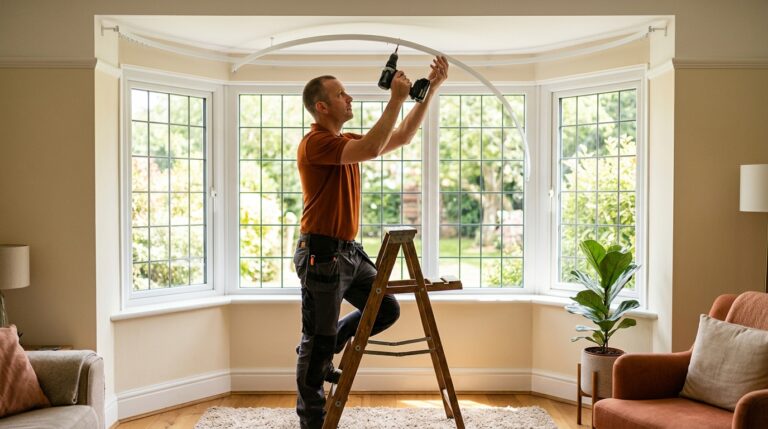
Hardware is its own line. A plain rod is inexpensive, and a hand finished rod with decorative finials is not. Rings, holdbacks, tiebacks and a valance or cornice each add to the total. Our curtain rods and hardware guide covers what to spend on, and how to hang drapes explains why the rod usually belongs several inches above and wider than the window.
Curtain making prices, line by line
Here is how the pieces of the job usually break down. Fabric is left open because it is the one line that swings from a few dollars a yard to a few hundred.
| Line item | Typical range | What moves it |
|---|---|---|
| Basic sewing labor, per panel | $100 to $200 | Pleat style, lining, panel size |
| Custom fabric | Varies widely | Yardage, fiber, pattern repeat |
| Curtain rod | $5 to $200 | Length, material, finials |
| Rings, set of 10 | $5 to $25, more for custom | Metal, finish, weight rating |
| Valance | $5 to $50, more for detailed work | Fabric, trim, construction |
| Cornice | $150 to $600 | Width, padding, fabric |
Two things are not on that list. One is installation, which is worth asking about directly, since a quote that leaves it out is not comparable to one that includes it. The other is removing and disposing of what is already on the window.
Where custom is worth paying for
Custom is not the answer for every window in the house. It earns its price where the window is an odd size, where the fabric is the thing you see when you walk in, or where a stock panel would sit two inches short of the floor for the next ten years.
For pure light control, a shade often costs less and does the job better than fabric alone. Many Bergen County homes end up with both: a roller shade or cellular shade at the glass for privacy and heat, with drapery panels at the sides for softness and color. That combination also lets you spend the fabric budget on two panels instead of a full traverse set.
What we would put on the window
- Bedroom on a busy street, tight budgetBlackout roller shade first, lined panels added later.
- Formal dining room used a few times a yearLined pinch pleat panels in a mid-range fabric on a decorative rod.
- Sliding door to the deckA shade or vertical treatment sized to the door, with drapery stacked clear of the traffic path.
- Two story wall of glass in a newer buildSolar shades for the glare, floor length panels at the ends for scale.
If you want to compare treatment types before you compare prices, start with our custom window treatments guide and the walkthrough on choosing and installing custom draperies. For doors specifically, see sliding door treatments.
What a window treatment showroom quote should include
A number over the phone is a guess. A useful quote comes after someone has measured the window, and it should show you the parts, not just a total. Ask for four things.
- Measurements taken on site. Window openings are rarely square, and a half inch of drop changes the panel. Measuring by eye is how people end up with panels that hang short.
- The fabric and lining named. You should be able to see the specific fabric and the specific lining, not a category.
- Hardware listed separately. Rod, brackets, rings and finials should appear as their own line so you can trade them up or down.
- Installation stated plainly. Either it is in the number or it is not.
Seeing fabric in person matters more than most people expect. Screen color is not fabric color, and weight is impossible to judge from a photo. A heavy linen and a light one can look identical online and behave nothing alike on the rod.
Get the number for your own windows
The Curtain is a family-owned window treatment showroom at 547 Broad Ave in Palisades Park, New Jersey, in business since 2007 and serving Bergen County. Sejun Park, our owner and designer, works through fabric, lining and hardware with you so the quote matches the room rather than a generic price chart.
We make custom drapery, and as a Hunter Douglas partner we also sell and install Hunter Douglas shades, blinds and shutters, so you can price fabric and shades side by side instead of guessing at the difference. Measurement in your home is free and the quote comes to you in writing. You can see finished work in our gallery, check your town on our service area page, or read more about the showroom.
Call (201) 302-9111 or book a free in-home measurement, and bring the rooms you are unsure about. Part of that visit is sorting out which windows are worth custom drapery and which are better served by a shade.