You’ve seen vinyl blinds in every big-box store aisle in New Jersey, priced low and promising easy upkeep for humid summers and drafty winters alike. But cheap doesn’t always mean right for your windows, your style, or your budget over time. Materials have moved on. This guide breaks down where vinyl blinds still make sense in 2026, and where wooden blinds, cellular shades, or shutters are the smarter long-term investment for your home.
What Are Vinyl Blinds and Why Homeowners Still Consider Them
Vinyl blinds are PVC horizontal slat blinds. They’ve been a staple of budget window coverings for decades. You’ll find them in rental apartments, builder-grade new construction, and plenty of kitchens and bathrooms across New Jersey. They’re cheap to manufacture, cheap to buy, and that’s really the whole pitch. No frills, no fuss. Just slats that tilt open and closed.
Where vinyl blinds work best
Moisture is where vinyl earns its keep. Unlike real wood, PVC doesn’t swell, crack, or rot when it gets humid. That makes it a sensible pick for bathrooms, laundry rooms, and kitchens near a sink or stove. A damp cloth wipes off grease and grime in seconds. No special cleaners, no delicate finish to protect.
Cost is the other big draw. Vinyl blinds often run a fraction of what wood or even faux-wood slats cost. That makes them a logical choice for landlords outfitting a rental unit or a homeowner covering a basement window they rarely think about. For a vacation property or a starter apartment, that math makes sense. Nobody’s pretending these are heirloom pieces.
Where they tend to fall short
Here’s the catch: vinyl softens and warps with heat. A south-facing window that bakes all afternoon can leave slats bowed or sagging within a couple of seasons. Direct sun also fades the finish, so blinds that looked crisp white in year one can look chalky and uneven by year three. That’s a real problem on bigger New Jersey windows that take direct afternoon sun much of the year.
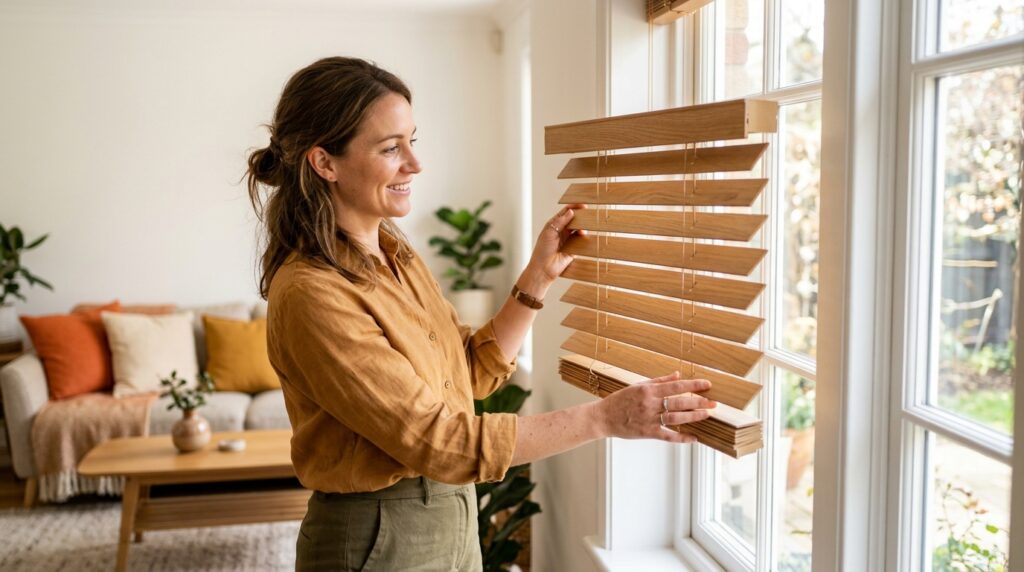
Style is the other tradeoff. Vinyl slats look and feel plasticky next to the grain and heft of real wood, and the color range is thin compared to richer options. If you’re weighing faux wood vs wood blinds against vinyl, the difference in texture and durability becomes obvious the moment you touch both. This isn’t a sales pitch against vinyl. It still has a place. But for most living rooms, dining rooms, and primary bedrooms, homeowners end up wanting something that looks better and lasts longer, which is exactly why the comparisons ahead matter.
Vinyl Blinds vs. Wooden and Metal Blinds: A Side-by-Side Look
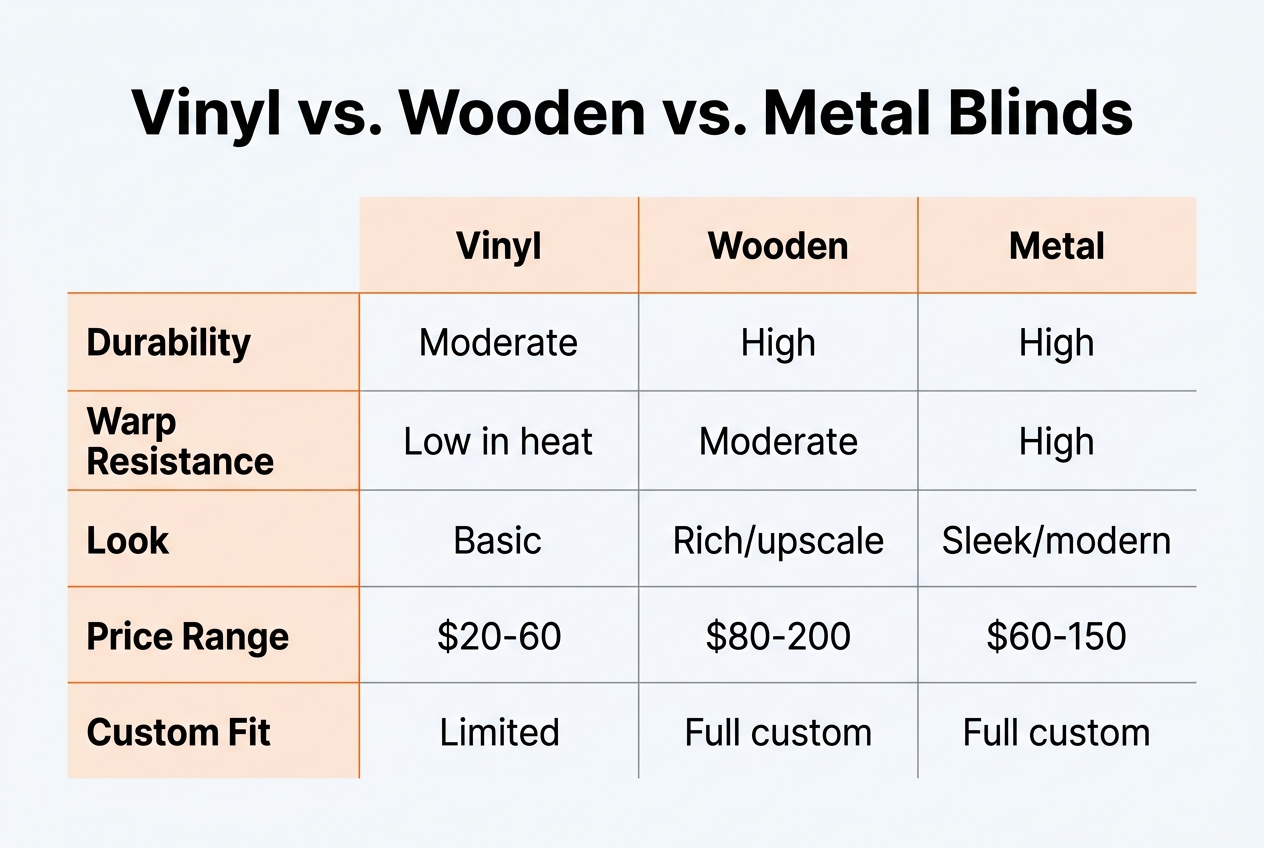
Vinyl, real wood, and aluminum metal blinds look similar on a showroom wall. But they behave very differently once they’re hanging in a sunny window for a few years. Vinyl is cheap and forgiving. Wood brings warmth and a premium finish. Metal holds up in places vinyl just can’t handle. Here’s how they stack up on the things that actually matter.
| Material | Durability | Warp resistance | Light control | Price tier |
|---|---|---|---|---|
| Vinyl | 5-7 years average | Poor in heat/sun | Good, gaps can widen over time | Budget |
| Real wood | 15+ years with care | Strong if sealed properly | Excellent, tight slat seal | Premium |
| Aluminum metal | 10-12 years | Very strong | Good, slim slats | Mid-range |
| Faux wood | 10+ years | Good, moisture-resistant | Excellent | Mid-range |
Durability and lifespan
Vinyl slats soften and bow when a window gets real afternoon sun, especially in south-facing rooms. Wooden blinds with a sturdier slat structure and premium finish hold their shape far longer, and the hardware simply lasts. That’s the real difference: Hunter Douglas-backed components are built to outlast the bargain hardware bundled with typical vinyl sets. Metal blinds suit high-moisture or high-traffic commercial spaces where vinyl’s flimsiness becomes a liability. Think lobbies, kitchens, and rental units with heavy daily use.
Appearance and resale value
Buyers notice warped, yellowed vinyl the second they walk a room, and it reads as a quick fix rather than a finished home. Real wood and well-finished metal photograph better and age better, which matters at resale. If you’re also updating hardware elsewhere in the home, a curtain rods and hardware guide is a useful companion read. Vinyl isn’t wrong for a rental or a basement. Just don’t expect it to carry a living room.
Solving Heat, Glare, and UV Problems Without Vinyl’s Drawbacks
Why adjustable shading often outperforms fixed solutions
Vinyl blinds look like a budget-friendly fix for sun and glare, but they don’t do much on the insulation front. The slats are thin, there’s no air pocket to speak of, and heat moves right through them. Worse, cheap vinyl discolors fast under direct sun. Give it a year or two of southern exposure and you’ll likely see yellowing, warping, or slats that won’t sit flat anymore. That’s not a defect. It’s just what vinyl does when it bakes.
Some homeowners skip blinds altogether and go with window film, a permanent layer applied straight to the glass by a film installer. It blocks UV well, no argument there. But once it’s on, it’s on. You can’t dial it back on a cloudy day or remove it without a whole separate job. That’s a real tradeoff, and one worth understanding before you commit; comparing automated blinds vs automated shades is a useful way to see what adjustable alternatives actually offer in daily use.
Cellular shades take a different approach entirely. Their honeycomb cells trap air in distinct pockets, which creates genuine insulation, not just a light-blocking layer. Light-filtering roller shades do similar work for glare and UV protection, cutting harsh sun and guarding furniture from fading without touching the glass at all. Because both are adjustable day to day, you get control a fixed film layer simply can’t match. Raise them, lower them, tilt them. Try doing that with film bonded to your window.
Addressing Drafts and Temperature Swings
When shades are enough
Vinyl blinds are thin. Their slats hang with gaps on either side and don’t seal against the frame, so cold air slides right past them in winter. If your window itself is sound, just drafty-feeling because of poor coverage, swapping vinyl for an insulating cellular shade can make a real difference. The honeycomb structure traps a layer of air against the glass, which slows heat transfer in both directions. It’s a simple fix, and it’s a lot cheaper than you’d think.
Think of it as a buffer, not a miracle. A double-cell shade on a double-pane window in reasonably good condition can noticeably cut down on that chilly feeling near the glass, especially in a room with large windows facing north. For homeowners juggling heating bills every January, that’s a meaningful, low-cost first step. It’s also far less disruptive than ripping out a whole window, something worth trying before you assume the problem is bigger than it is.
and when they’re not
Here’s the catch: shades can’t fix a broken window. If the frame is warped, the glass is fogging between panes, or you’re still dealing with single-pane glass from decades ago, no shade — cellular or otherwise — will solve that. Fogging specifically means the seal has failed, and air is literally getting between the panes. That’s a structural problem a window contractor needs to handle, not a styling one. Trying to shade your way out of it just means you’re spending money twice.
It’s worth being honest with yourself about which category your window falls into. For readers weighing whether a shade alone will do the job, learning about roman shades and other insulating layered treatments can help clarify what’s realistic to expect versus what still needs a contractor’s attention. Cellular shades are meant to complement a structurally sound window, not patch over one that’s actively failing. Pair them with a window in good shape, and you’ll likely be pleased with the result. Pair them with a failing one, and you’re just dressing up a bigger problem.

Choosing Between Vinyl Blinds, Shutters, and Woven Shades by Room
Not every room wants the same window treatment. Vinyl’s low price looks tempting everywhere, but the right pick really does change room by room. Here’s a practical breakdown of where vinyl still earns its keep, and where a different material gets you better light control, warmth, or just a longer life out of the product.
- Bathrooms and kitchens: vinyl shrugs off splashes and steam, but plantation-style shutters hold up longer under daily humidity and give you tighter louver control over morning glare at the sink.
- Living rooms and bedrooms: woven woods or roman shades add grain, weave, and softness that flat vinyl slats simply can’t fake, and they tend to read as furniture, not just hardware on the window.
- Sliding glass doors: this is where vinyl mini blinds fall apart, literally, under repeated handling, which is why learning about vertical blinds for sliding glass doors makes sense before you commit to anything else.
- Home offices: cellular shades cut screen glare without the dated mini-blind look, and their honeycomb pockets add a bit of insulation your laptop fan will thank you for.
- Dining rooms and entryways: shutters again win on first impressions, giving a tailored, furniture-grade look that vinyl’s utilitarian slats never quite manage.
- Kids’ rooms: whatever material you choose, cordless lift systems matter more than the slat itself for everyday safety and ease of use.
So, room by room, vinyl is rarely the best answer, just the cheapest one. That’s fine for a rental or a quick fix. For a forever home, it’s worth matching material to the room instead of defaulting to one blind for the whole house.
Cordless, Motorized, and Child-Safety Considerations
Why cordless designs matter for families
Standard vinyl blinds often come with dangling pull cords and looped chains. It’s a classic design, and it’s also a recognized hazard in homes with young kids or curious pets. Pediatric safety groups have flagged corded blinds for decades, and manufacturers across the industry have been phasing them out in favor of safer lift systems. If you’ve got a toddler crawling near a window, this isn’t a small detail.
Cordless lift systems solve the problem by removing the loose cord entirely; you raise and lower the blind by hand, with no hanging loop left behind. Motorized shades take it a step further, swapping cords for a remote, a wall switch, or an app. A few points worth sorting out before you decide:
- Cordless lifts work on a spring or clutch mechanism, so there’s nothing for a child to grab or wrap around their neck.
- Motorized shades using a system like PowerView can be set on a daily schedule, so they open and close without anyone touching them.
- App-based control lets you adjust shades from your phone, which matters if you’re out and forgot to close a west-facing window.
- If a shade acts up after a firmware hiccup or a lost signal, knowing how to reset motorized blinds usually solves it faster than calling for service.
- PowerView controls window treatments only; it’s not a whole-home security or automation platform, so pairing it with lighting or locks means bringing in a separate AV integrator.
- Battery or hardwired motor options both exist, and the right one depends on how many windows you’re automating.
One honest clarification: cordless and motorized options are a safety upgrade, not a security product. They won’t stop an intruder. They will stop a cord from becoming a hazard.
Repair, Replacement, and Long-Term Care
Signs it’s time to replace instead of repair
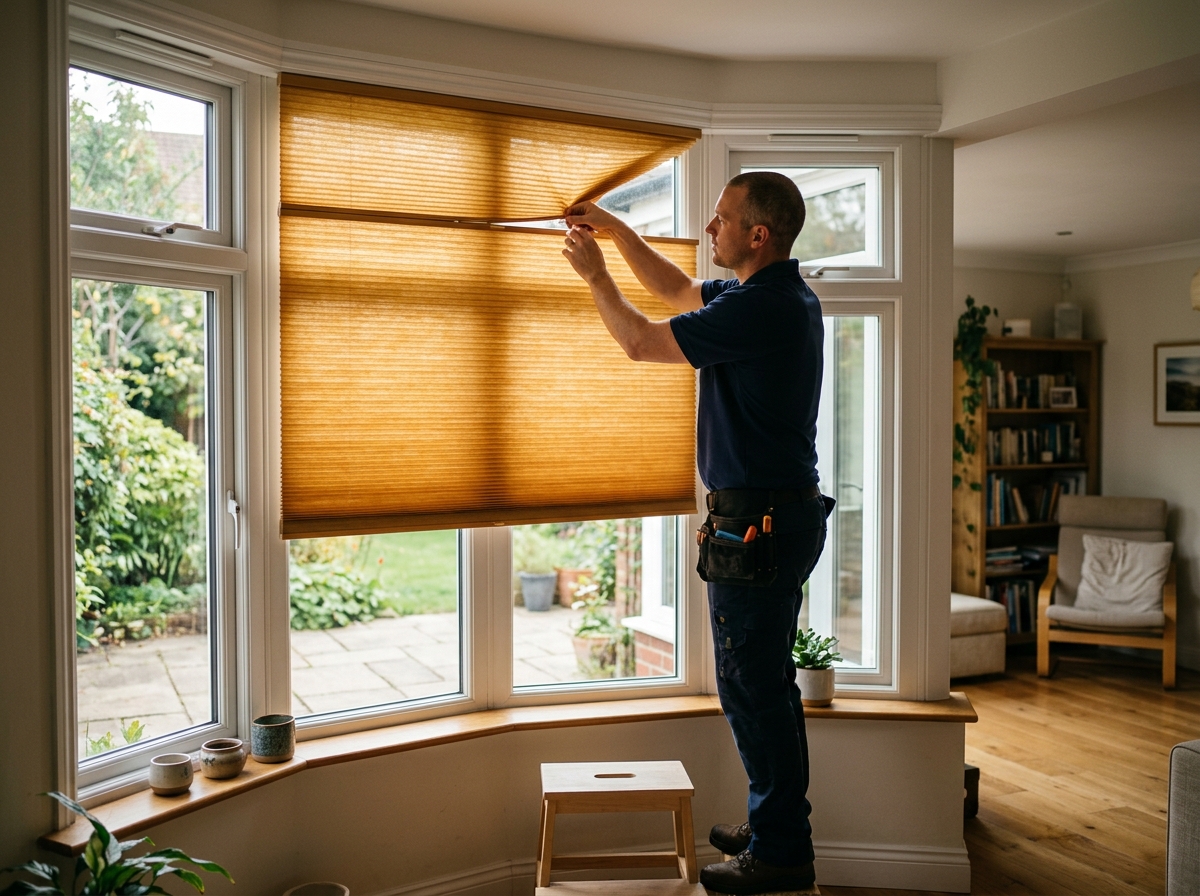
Vinyl slats that warp from heat, yellow with age, or snap under a light tug usually can’t be fixed. That’s just how the material behaves. Once one slat goes, more tend to follow within a season or two, so full replacement is often the realistic answer rather than a patch job.
Premium blinds and shades are a different story. Wood, faux wood, and cellular products can often be repaired at the hardware or slat level, which stretches their usable life by years instead of forcing a full swap. A broken lift cord, a cracked tilt wand, or a bent headrail bracket can typically be swapped out on its own. Knowing how often should you replace your curtains and shades helps set realistic expectations before a small issue turns into a full teardown.
One more distinction worth knowing: repair service covers mechanisms and moving parts, not soiled fabric. If a roller shade’s fabric is stained or drapery panels need refreshing, that’s a job for a dedicated fabric cleaner, not a repair technician.
Here’s a simple way to work through the decision before you commit either way.
| Step | What to check | What it tells you |
|---|---|---|
| 1. Inspect slats and cords | Cracks, discoloration, fraying, or snapped lift cords | Vinyl damage usually means replace; frayed cords alone can be repaired |
| 2. Test the lift mechanism | Does it raise, lower, and tilt smoothly? | Sticking mechanisms are often a quick hardware fix |
| 3. Compare costs | Repair quote vs. replacement quote | If repair tops 50% of replacement cost, replacing usually wins |
| 4. Consult a specialist | In-person or photo-based assessment | An honest recommendation, not a guess from across the room |
Skip the guesswork and get a straight answer. A specialist can tell you in minutes what forum posts can’t.
Getting Expert Guidance Before You Buy
What to expect during a consultation
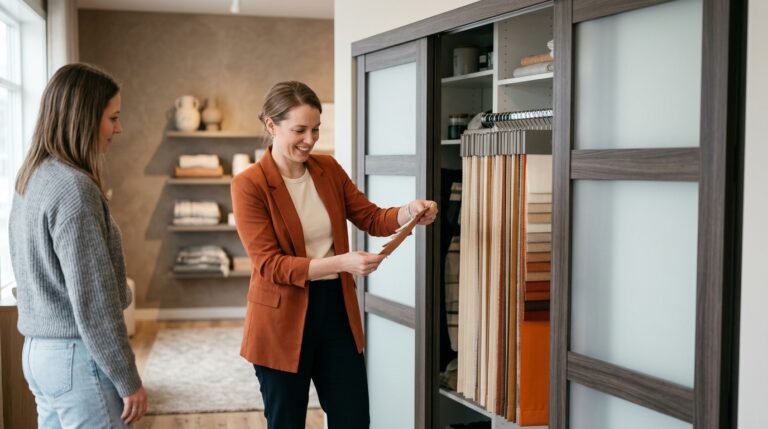
A free in-home consultation isn’t a sales pitch dressed up as a favor. It’s a chance to see vinyl blinds next to wood, cellular, roller, and shutter samples in the actual light that hits your actual windows. A swatch under showroom halogen tells you nothing about how it looks at 4 p.m. with western sun pouring through your kitchen. That difference matters more than people expect.
Keep your expectations focused, though. The designer isn’t there to rearrange your furniture or pick your wall color. The session covers window treatment design specifically: fabric weight, opacity, light control, and how a given material holds up in your room’s conditions. Full room styling isn’t the goal, and it’s fair to be clear-eyed about that going in. If you’re also weighing custom drapery alongside blinds, knowing custom curtains costs ahead of time helps you compare apples to apples instead of guessing at budget later.
Consultations like this are available across Bergen County, including Fort Lee, Cliffside Park, Edgewater, Leonia, Englewood, Tenafly, Ridgewood, and Franklin Lakes. You can reach a designer directly at (201) 302-9111, or stop by the Palisades Park showroom to compare materials in person before anyone sets foot in your home.
Cost is usually the sticking point between vinyl and a premium alternative like real wood or cellular shades. That gap narrows, sometimes a lot, when seasonal promotions line up with your timing. It’s worth asking what’s currently running before you default to vinyl just to save money.
Before settling on anything, it helps to think about which problem actually bothers you most—glare and heat, privacy, drafty glass, or just the look of a room—since the right fix depends on which one you’re solving. If drafts or fogged panes are the real issue, that’s worth a conversation with a window contractor first, while light control and style are better questions for a design consultation. Either way, it’s worth asking how adjustable you want the solution to be, since some fixes are permanent and others let you change your mind as the seasons do.