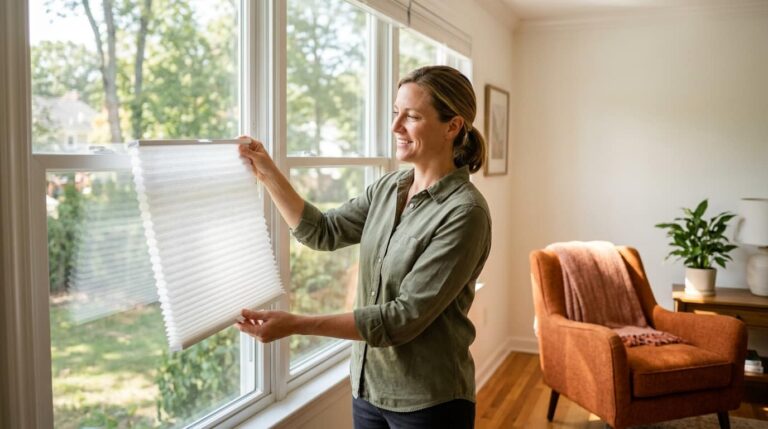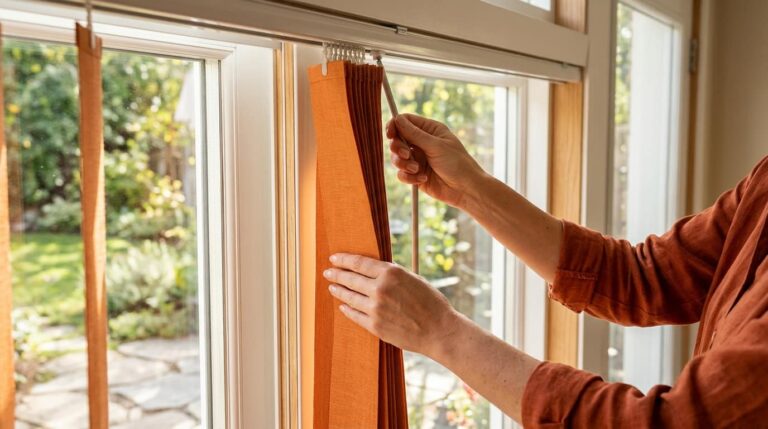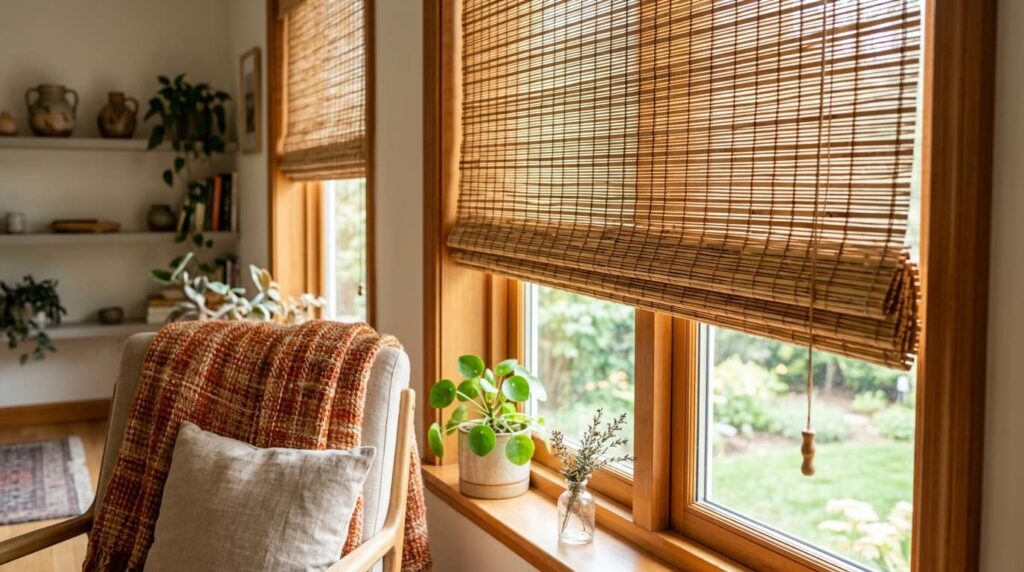
You like the look of natural woven texture at your windows, but you’re not sure if bamboo blinds will hold up, filter light the way you want, or fit your budget once installation and hardware are factored in. A bamboo blinds window treatment can bring warmth and organic texture to a room, but the category hides real differences in durability, light control, and price that aren’t obvious from a product photo. Before you commit, it helps to know what separates a good bamboo option from one you’ll regret. This breaks down exactly what to check.
What Makes Bamboo Blinds a Window Favorite
Bamboo Blinds vs. Woven Wood Shades: Is There a Difference?
There’s a reason bamboo blinds keep showing up in design photos. They bring a natural texture to a room that man-made materials just can’t fake. The grain, the slight imperfections, the warm tone — it all reads as organic, not manufactured. That’s the appeal in one sentence.
Technically, these shades are woven from bamboo reeds, grasses, jute, or thin wood slats, strung together on cording strong enough to hold the whole thing up and roll it cleanly. The construction matters. It’s what lets a shade stay flexible enough to fold or stack while still holding its shape over years of daily use. That weave is also why these shades fit so naturally into coastal, farmhouse, and transitional rooms — the fiber variation and earthy color give a space depth that flat fabric shades don’t offer. If you’re comparing window coverings more broadly, it helps to first learn how automated shades differ from automated blinds before deciding which category fits your windows and your budget.
Here’s the terminology quirk worth knowing: what retailers sell as “bamboo shades” for indoor use, the industry calls woven wood shades. Same product, different label. And because the materials are natural, no two shades weave up identical — slight color and grain variation is normal, not a flaw.
Styles and Construction: Inside a Bamboo Window Shade
Flat Fold vs. Roll-Up Construction
Not every bamboo shade operates the same way, and the construction method changes both the look and the daily function. A flat roman-fold shade gathers into neat horizontal pleats that stack at the top of the window when raised, giving a tailored, structured appearance. A roll-up shade works more like a window shade of old: it coils into a tight bundle at the headrail, landing somewhere between rustic and minimalist. Here’s a quick side-by-side look at how the two stack up.
| Feature | Flat Roman-Fold | Roll-Up |
|---|---|---|
| Stacked appearance | Neat, layered pleats | Compact coiled bundle |
| Best-suited style | Tailored, formal rooms | Casual, beach, or farmhouse décor |
| Stack height when raised | Moderate (3-6 inches typical) | Low to moderate (2-5 inches typical) |
| Visual texture | Flatter, more uniform | Rounder, more organic |
| Common width range | Up to about 96 inches | Up to about 72 inches |
Neither style is objectively better. It really comes down to whether you want a crisper, folded profile or a softer, bundled one.
Liners, Valances, and Lift Options
A plain headrail can look unfinished, so many shades offer a matching valance that covers the hardware and gives the window a clean, built-in look from below. For privacy or light control, a liner can be added behind the woven bamboo. It closes gaps between the reeds and softens harsh daylight without losing the natural texture up front. If you’re also weighing solar roller shades for a sunnier room, understanding pet friendly window treatment options can help you compare durability against claws and chewing before you commit to one weave or another. Lift mechanisms matter too. Cordless lifts and motorized options, including app-based lift systems, cut down on dangling cords, which matters a lot if you’ve got toddlers or curious pets at home. Worth noting: insulating performance on any shade is tied to the home’s broader heating and cooling setup, so if drafts persist even after new window coverings, it may point toward issues better addressed through professional heating installation rather than the shade itself.
Where Bamboo Blinds Work Best in a Home
Best Rooms for Natural Texture
Some rooms practically ask for this look. The texture reads as warm, not flashy, which is why it works so well against plain backdrops.
- Living rooms and dens gain visual depth when the woven texture sits against neutral sofas, painted walls, or simple area rugs.
- Kitchens and dining areas with wood cabinetry, butcher block counters, or exposed ceiling beams get a cohesive, natural look that ties the whole room together.
- Sunrooms and three-season porches suit the material’s relaxed, organic feel, especially where the décor already leans toward wicker, rattan, or linen.
- Home offices with a casual, lodge-like aesthetic benefit from the same grounding effect, especially paired with leather or canvas furniture.
Notice the pattern: rooms with natural materials nearby, wood, wicker, stone, let bamboo blend in rather than stand out awkwardly.
Rooms Where Bamboo Needs a Backup Plan
Two rooms deserve a second thought before you commit. First, bedrooms. Bamboo weaves let light filter through even when fully lowered, which is fine for a den but tricky at 6 a.m. in a bedroom. Pairing the shade with a liner, or layering linen curtains behind it, solves both the light gap and the privacy issue after dark. Second, bathrooms and other high-humidity spaces are a poor match. Natural fiber absorbs moisture, and over time that means warping, discoloration, or mildew. A powder room with good ventilation might get away with it. A shower-adjacent window won’t. If privacy at night matters more broadly, it helps to compare notes on privacy curtains before deciding where natural weaves belong and where they don’t. Bottom line: bamboo’s a texture play, not a blackout or moisture solution. Ask it to do either job alone, and you’ll be disappointed.
The Trade-Offs: Privacy, Light Gaps, and Durability
What Bamboo Blinds Can’t Do Well
Let’s be honest about the downsides, because every material has them. The woven construction that gives bamboo its texture also means tiny gaps between reeds, grasses, and yarns. Even fully lowered, these blinds let slivers of light filter through. For a kitchen or sunroom, that’s charming. For a bedroom where you want it dark at 6 a.m., it’s a problem.
Nighttime privacy is limited unless you add a fabric liner or blackout backing underneath. Plenty of manufacturers offer this as an upsell, and it’s worth it for street-facing rooms. Without it, passersby can often make out shapes and movement after dark, even if they can’t see details clearly.
UV and heat control is modest, too, compared to engineered light-filtering shades built specifically for solar performance. Humidity is another weak spot: bamboo can warp, swell, or bow in steamy bathrooms and coastal homes with heavy moisture, so it’s best suited to dry climates and dry rooms. And over years of direct sun, reed and grass fibers fade unevenly and start to fray at the edges. A blind that cost $150 might need replacing in five or six years in a south-facing window that gets blasted daily, while a lightly used north-facing one could last well over a decade. If moisture resistance and lasting privacy matter more than that are concerns, reading up on privacy and moisture solutions for damp rooms is a smart next step before you commit to natural fiber anywhere near a shower.
A More Controlled Alternative for Light, Privacy, and Temperature
Love the natural look of bamboo but tired of guessing how much light it’ll let through? You’ve got options. Several window covering types borrow that same warm, organic feel while giving you far tighter control over light, privacy, and temperature swings near the glass.
Woven Shades, Solar Shades, and Cellular Shades Compared
Each of these handles light and heat a little differently, so it helps to see them side by side before deciding which fits your room.
| Shade Type | Light Control | Insulating Value | Best For |
|---|---|---|---|
| Woven Shades | Moderate, tighter weave reduces gaps | Low to moderate | Living rooms, warm natural look |
| Solar Roller Shades | High glare cut, view stays visible | Low | Sunny rooms, screens, home offices |
| Light-Filtering Roller Shades | Softens light, more privacy | Low to moderate | Bedrooms, dining rooms |
| Cellular Shades | Moderate to full blackout options | High, honeycomb air pockets | Drafty windows, older panes |
Woven shades from a professional line come with tighter weaves and optional blackout or light-filtering liners built right in, something most retail bamboo sets simply don’t offer. Solar and light-filtering roller shades cut glare and UV without blacking out the view entirely, and unlike window film, they raise, lower, or come off whenever you want. Cellular shades go a step further, trapping air in insulating pockets that steady the temperature near drafty glass. It’s a smart, lower-cost move before you consider a full window contractor for aging single-pane windows.
Why a Custom Fit Outperforms Off-the-Shelf Bamboo
Big-box bamboo blinds come in a handful of standard widths. Your windows don’t care. That mismatch is why you see gaps at the edges and strips of light leaking in along the frame. Custom-fabricated woven shades are measured and lined for one specific window, which is also why, after years of seeing both, many installers will tell you are woven wood shades out of style is the wrong question, fit matters more than trend. A free in-home design consultation lets a designer hold bamboo-style woven swatches up against roller or cellular samples in your actual room light, which looks nothing like a showroom.
Choosing, Measuring, and Installing the Right Shade
Before you order anything, grab a tape measure. You’ll want two sets of numbers: the inside of the window frame, for an inside mount, and the surrounding wall space, for an outside mount. Get this wrong and you’ll end up with a shade that binds, gaps, or simply won’t fit. If you’re doing this yourself, how to measure for blinds is worth reading closely before you commit to an order, since bamboo materials don’t trim or adjust the way vinyl or faux wood does.
Inside Mount vs. Outside Mount
Inside mounts sit flush inside the frame for a clean, built-in look. Outside mounts hang on the wall above and around the window instead. That difference matters more than it sounds like.
- Inside mounts give you that tailored, recessed appearance that shows off trim and molding.
- Outside mounts hide a frame that’s chipped, warped, or just plain ugly.
- Outside mounts also block more light and offer better privacy, since the shade overlaps the wall on all sides.
- Inside mounts need at least 2 to 3 inches of frame depth, which bamboo’s thicker slats don’t always have.
- Outside mounts forgive an out-of-square opening far better than a snug inside fit ever will.
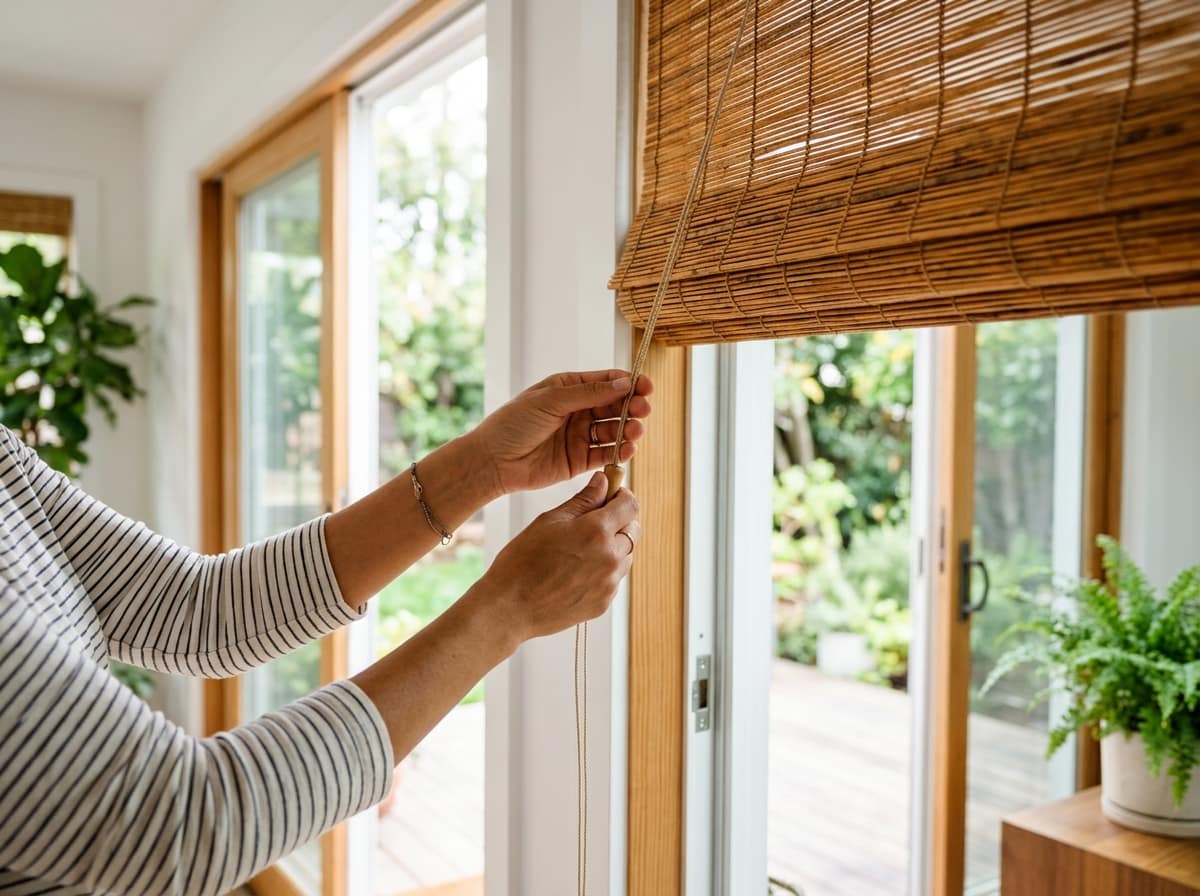
Lift Styles: Cordless, Corded, and Motorized
Think about who actually uses the room before picking a lift. Cordless lifts are the safer bet with kids or pets around, since there’s nothing dangling to grab. Continuous-cord systems are affordable and steady for low-traffic rooms. Motorized options let you raise a whole bank of windows with a tap, no step stool required. Skip the DIY install kit if you can. Uneven brackets, sagging panels, and visible gaps are the usual result, and a crooked frame will expose every flaw. A quick professional consultation catches those structural quirks before they become a return shipment.
Caring for Natural Window Coverings and Getting Expert Help
Routine Care vs. When to Call a Cleaner
Bamboo and woven shades hold onto dust in a way smooth vinyl blinds never do. The reeds and grasses have texture, and grit works its way into the weave if you let it. A soft brush attachment on your vacuum, run over the shade every couple of weeks, keeps that buildup from settling in. Skip this step for a few months and you’ll notice the shade looks dingy even right after you’ve wiped it down.
Spot cleaning is fine for the occasional smudge or splash. Use a barely damp cloth, dab rather than scrub, and let it air dry fully before you roll or raise the shade again. Don’t soak the material. Natural reeds and grasses absorb water and can warp, discolor, or separate from the backing when they’re saturated. That warping is permanent, too — no amount of reshaping fixes it once the fibers swell and dry unevenly.
Once you’re past surface dust and into ground-in grime, stained liners, or odors, stop scrubbing and call in help instead. The Curtain’s own repair service covers hardware and the shades themselves, not fabric cleaning. For ground-in grime, stained liners, or odors, a dedicated drapery or blind cleaning service has the equipment to get fabric and liners properly clean without stressing the material. It’s also worth pairing that upkeep with your guide to energy efficient window coverings if you’re trying to get more performance out of the shades you already own.
Repairing Worn Hardware and Motorized Options
Hardware wears out before the material usually does. Cords fray, lift mechanisms stick, and tilt wands loosen with years of daily use. When that happens, a window treatment repair consultation is the right move — a technician can tell you whether it’s a quick fix or whether the shade has reached the end of its useful life. That distinction matters, because paying to repair a shade that’s already failing elsewhere isn’t money well spent.
For households ready to upgrade rather than repair, PowerView automation turns compatible shades into app- or schedule-controlled devices. You can set bamboo-style woven shades to lower at noon when the sun’s hardest on the room, or raise them automatically at sunrise. It’s worth being clear-eyed here: this is shade-specific motorization, not a whole-home smart system. If you’re after broader automation, wiring and integration work like that belongs to an AV integrator, not a window treatment provider.
Either path starts the same way: get eyes on the actual shade before guessing. A frayed cord looks minor until it snaps mid-lift. A sticking mechanism usually means worn internal parts, not a one-time glitch. The Curtain offers a quick repair assessment for exactly this, and it’s the cheapest way to find out if your current shades have a few more years left in them.
Bamboo Blinds Window FAQ
Quick Answers Before You Buy
Got a quick question before you commit? Here are the answers homeowners ask most, in plain language, no fluff.
- Hanging them: mounting brackets attach to the frame or wall, and wider windows usually need two people to lift and seat the headrail without bowing it.
- Nighttime privacy: bamboo-style shades aren’t fully opaque after dark, so pairing one with a liner or a drapery panel solves that gap.
- Room fit: they shine in living rooms and sunrooms, but humidity in bathrooms or steamy kitchens can warp the reeds over time.
- Light control: the woven texture always lets some light filter through, unless you add a blackout liner behind it.
- Cleaning: a light dusting handles everyday upkeep, but deep-cleaning a fabric liner is a job best left to a professional cleaner.
- Consultation timing: book one when you’re weighing woven shades against roller, cellular, or custom drapery for a specific room’s light and privacy needs.
A few of these deserve more nuance. Mounting matters more than people think — inside mounts sit flush in the frame, while outside mounts cover more glass and block more glare, so the bracket choice shapes performance, not just looks. For a room that needs real light management, reading up on choosing and installing custom draperies can clarify how a liner or panel works alongside a woven shade instead of replacing it.
On cleaning: don’t reach for water and a scrub brush on natural reeds. That warps them fast. A dry cloth or vacuum brush attachment is safer, and anything beyond surface dust should go to a dedicated fabric or blind cleaning service, since that falls outside The Curtain’s repair-focused scope. As for booking a visit, The Curtain’s free in-home consultation is most useful when you’re genuinely torn between materials, not just shopping for a quick swap.
Bamboo blinds bring a natural, textured warmth to a room that few other materials can match, and choosing the right width, mount, and lift system makes all the difference in how they look day to day. If your windows are oddly shaped or angled, that’s worth exploring with someone who handles specialty shaped window treatments, like The Curtain, so the fit feels intentional rather than improvised. From here, the best next step is simply narrowing down the look and function you want most, then getting a knowledgeable eye on the actual window before making a final decision.