Knowing how to hang curtain rods is the difference between drapery that looks built for the room and drapery that looks hung on a Saturday afternoon. The rod is the part you buy once and live with, so this guide covers both halves of the job: choosing hardware that will not sag or pull out of the wall, and mounting it at the right width and height, level, the first time. Near the end we cover how our Palisades Park showroom measures for custom drapery in Bergen County.
Gather Your Tools and Materials
Before you pick up a drill:
- Tape measure (long enough to span the window width)
- Pencil
- Level (a 24-inch level gives the most accuracy)
- Stud finder (or heavy-duty wall anchors)
- Drill with 1/8-inch and 1/4-inch bits
- Phillips or flat-head screwdriver
- Brackets, screws and anchors included with your rod
- Step ladder
Choose the Rod and Hardware Before You Drill
Most crooked, sagging installs trace back to the wrong rod, not the wrong technique. Decide these four things before you mark a wall:
- Diameter. A 1-inch to 1 3/8-inch rod carries lined drapery panels without bowing; 5/8-inch and 3/4-inch rods are for cafe curtains and light sheers. Grommet panels need about 1/4 inch of clearance over the rod so they slide instead of scrape (see our grommet curtains guide).
- Pole with rings or traverse rod. A pole with rings suits panels that stay mostly open and get pulled by hand. A traverse rod, drawn by cord or wand, is built for pinch-pleat drapery you open and close daily.
- One piece or telescoping. Adjustable rods sag at the joint on wide windows. Over 60 inches, use a one-piece rod cut to length plus a center support.
- Bracket projection. Standard brackets hold the rod 3 to 4 inches off the wall; deep trim or a double rod needs more. Wrap-around (return) brackets curve the rod back to the wall and close the light gap at the edges of blackout panels.
Match the finish to metal already in the room, then see our curtain rods and hardware guide and double versus single curtain rods.
Measure Twice, Mount Once
1. Determine Rod Width
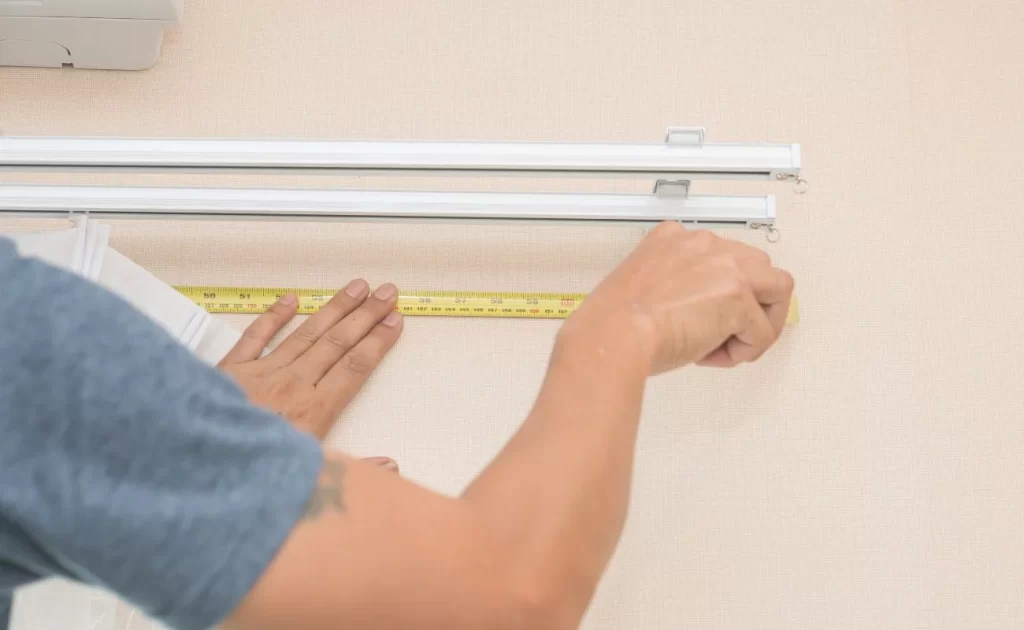
Add 8 to 12 inches (4 to 6 inches on each side) to the window frame’s width. This lets curtains open fully and clear the glass.
2. Decide Rod Height
Mount 4 to 6 inches above the top of the frame for standard drapes. Want to create the illusion of taller ceilings? Go 8 to 12 inches higher, or nearly to the crown molding for floor-to-ceiling elegance.
3. Account for Curtain Length
Measure from the planned rod height to the floor (or sill) to confirm whether your panels will float (1/2 inch above the floor), kiss (just touching) or puddle (4 to 8 inches of fabric pooling). See should curtains touch the floor for the trade-offs.
Mark and Confirm Bracket Placement
- Locate studs: Run the stud finder along each side of the window. Hitting wood? Use shorter screws. No stud? Use anchors rated for at least 25 lb.
- Mark hole centers: Hold a bracket at the measured height and depth, then mark screw holes with your pencil. Repeat on the opposite side, double-checking symmetry with your level.
- Check level across: Lightly snap a chalk line or rest the level between marks. Adjust as needed so both brackets sit perfectly horizontal.
Drill Pilot Holes
Start with a 1/8-inch bit to create pilot holes. It prevents drywall blow-outs and guides screws straight. If you’re using anchors, switch to the manufacturer’s recommended bit (often 1/4 inch) and gently drill to the proper depth. Many older houses in Bergen County have plaster over lath; drill slowly there.
Install Anchors and Brackets
- Anchors first: Tap self-drilling anchors flush with the wall, or insert toggle bolts through the bracket if the design requires.
- Attach brackets: Drive screws snugly but avoid over-tightening; stripping threads reduces holding power.
- Test strength: Tug each bracket firmly. If it wiggles, tighten or upgrade to stronger anchors before proceeding.
Assemble and Level the Curtain Rod
- Feed on finials and rings: Add end caps, rings or grommet panels before lifting the rod.
- Set the rod: Place it into the brackets. If your rod extends, pull both sides equally to keep the center seam over the midpoint of the window.
- Final level check: Lay the level on top of the rod. Tiny adjustments in the brackets’ set screws can correct minor slants.
How to Hang Curtain Rods Evenly Across a Row of Windows
One window is easy. A row of three is where DIY installs go wrong: the frames are rarely at the same height, and the eye reads the rods, not the frames. Two habits fix it:
- Measure down from the ceiling, not up from the frame. Pick one bracket height, say 7 inches below the ceiling, and use it at every window.
- Make a story stick. Cut a strip of scrap wood to the ceiling-to-bracket distance, mark the screw holes on it, and hold it against the ceiling at each window. It cannot drift.
Keep the overhang identical on every rod and re-check level after the panels are hung.
Hang Curtains and Make Final Adjustments
Slide your drapes or rings into position. Step back 8 to 10 feet and review:
- Even hems: Panels should hover consistently or puddle evenly.
- Fullness: Aim for curtain width 1.5 to 2 times the rod’s width for luxurious gathers.
- Smooth glide: Open and close panels a few times. If they snag, verify that finials aren’t pinched and brackets aren’t squeezing the rod.
The rod is half the job; how to hang curtains picks up from here.
Common Mistakes When Learning How to Hang Curtain Rods
| Mistake | Why It Happens | How You Avoid It |
|---|---|---|
| Rod installed too low | Eye-level measuring instead of ceiling-aware planning | Measure from ceiling down, not from frame up |
| Skipping pilot holes | Impatience | Pilot every screw to avoid cracked plaster |
| Using light-duty anchors | Underestimating curtain weight | Check the package; heavy blackout panels need 25 lb+ anchors |
| Ignoring rod sag | Over-extending or cheap materials | Use a center support on spans over 60 inches and choose a sturdy metal rod |
| Uneven curtain length | Forgetting to pre-hang panels for measurement | Hang one panel before finalizing rod height |
Style Ideas to Inspire Your Install
- Layer sheers and blackouts: Mount a double rod so you can pull sheers by day and blackouts at night (see how to layer curtains).
- Go wide-frame: Extend rods 12 inches past the window for a grander look and to avoid blocking light.
- Match metals: Coordinate rod finish with existing hardware; brass with brass lamp bases and drawer pulls.
- Embrace ceiling mounting: In small rooms, ceiling-mounted track rods draw the eye upward and free wall space around the frame.
When a Rod Is the Wrong Tool for the Window
Some windows fight a rod no matter how carefully you mount it:
- Bay windows. Three angles and no straight run. Hinged bay rods exist, but the corner brackets are fussy and panels bunch at the angles. A shade in each opening with drapery on the flanking wall is often cleaner; our bay window page shows both.
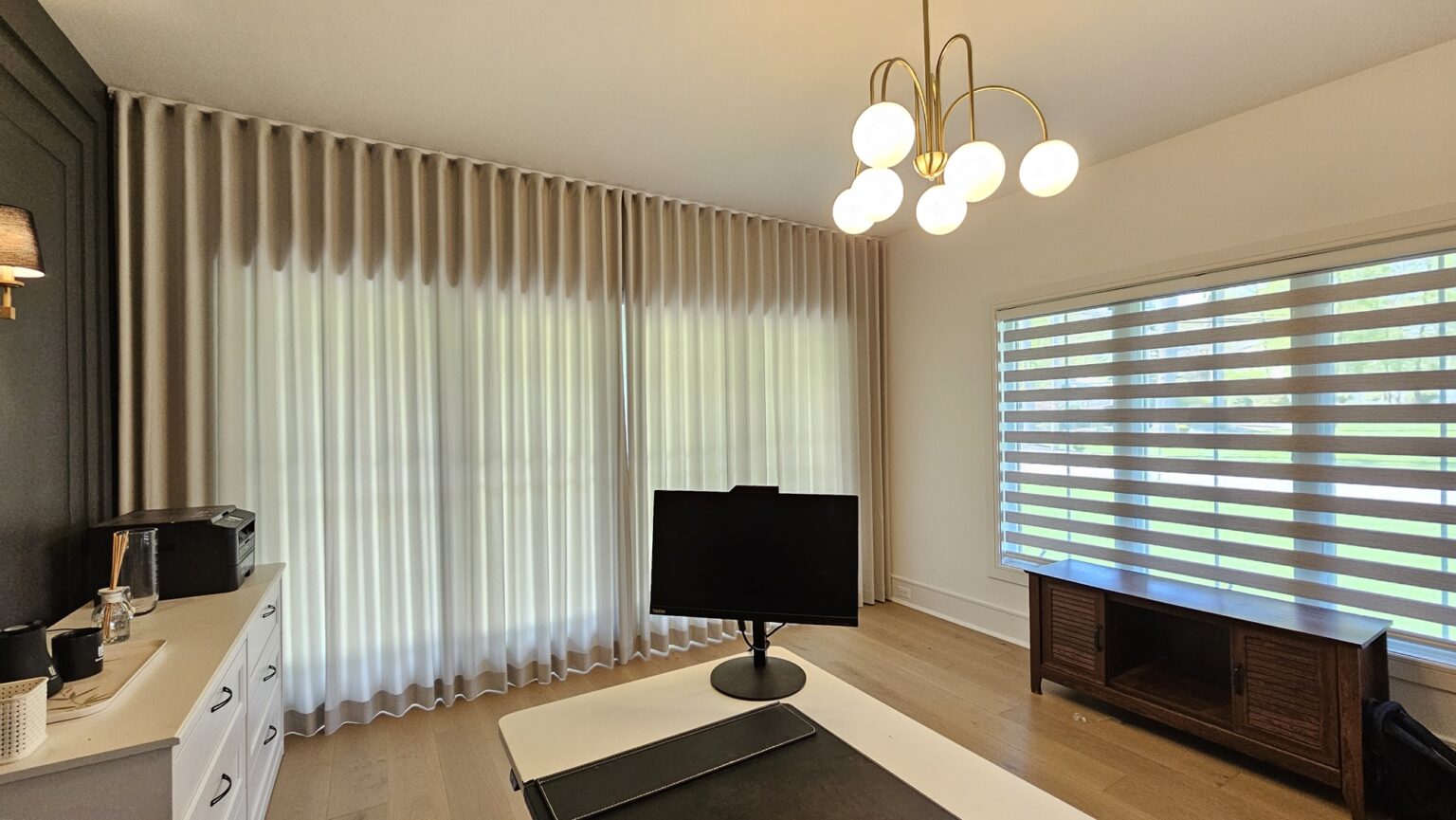
- Sliding doors. The rod must clear the full stack of fabric so the door still opens, so it runs far wider than the frame (see our sliding door page).
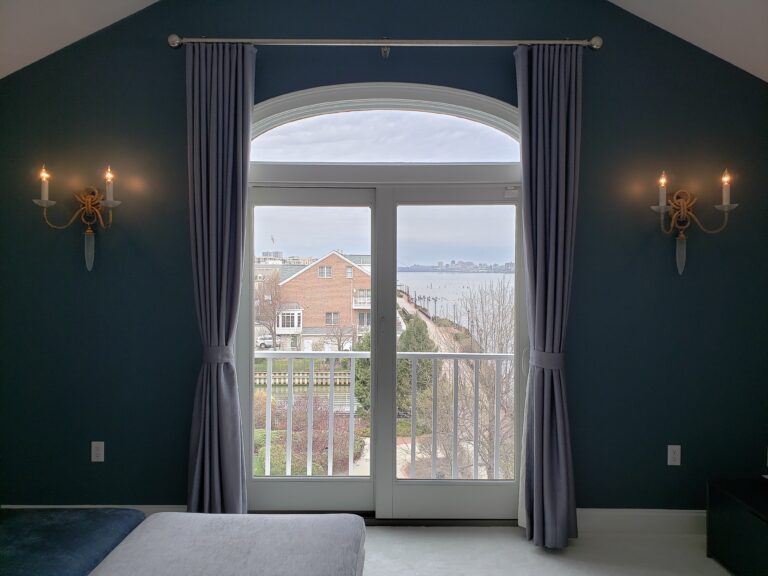
- Arched windows. A straight rod above the arch hides the shape you paid for. See how to hang curtains on an arched window.
- Rentals and no-drill walls. Tension rods and adhesive brackets carry light fabric only; see hanging curtains without drilling for what actually holds.
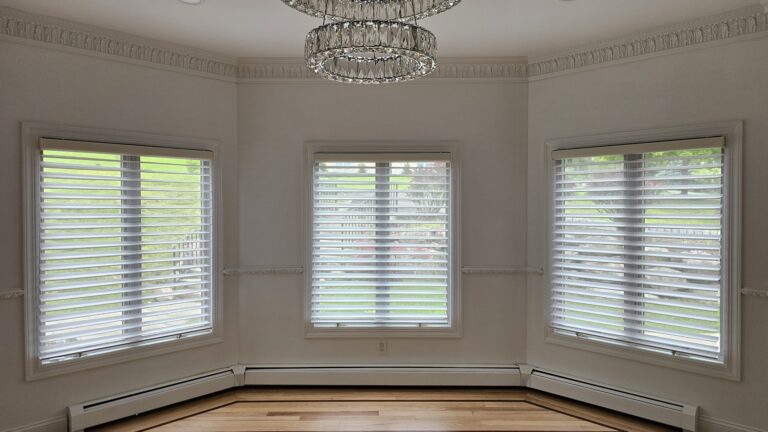
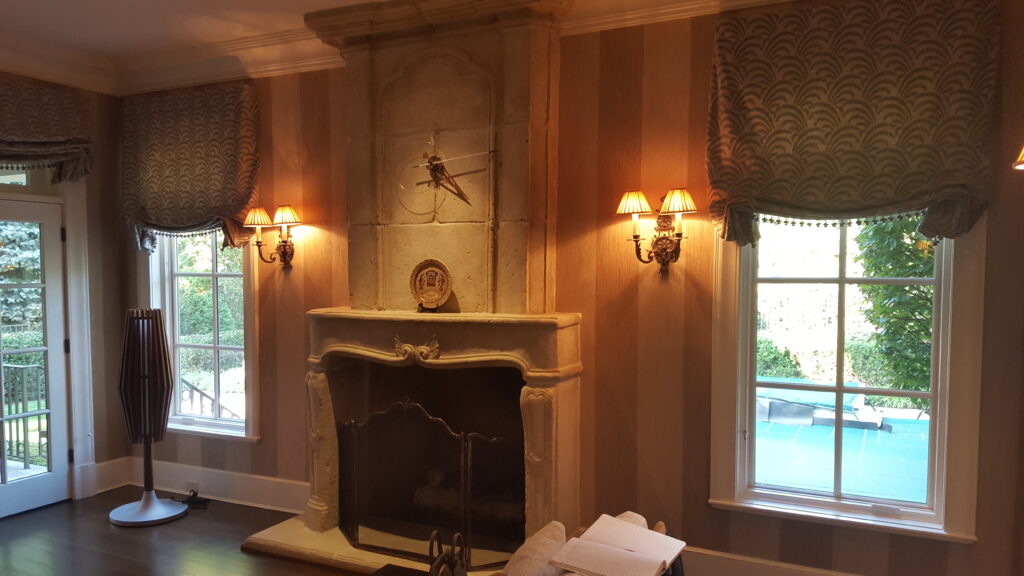
For fabric at the window without a pole, a custom roman shade mounts inside the frame or on the wall just above it.
FAQs: Quick Answers to Hanging-Rod Questions
Can I mount into drywall without a stud? Yes, as long as you use high-quality anchors rated for the total weight of rod, panels and any decorative tie-backs.
How high should I hang rods for floor-to-ceiling drapes? Measure 1 to 2 inches below the ceiling or crown molding for maximum height illusion.
Do I need a center support bracket? If your rod length exceeds 60 inches or your fabric is heavy, add a center bracket to prevent sagging.
What if my walls are masonry? Swap drywall anchors for masonry screws and a carbide drill bit sized to the fasteners.
From our own installs in Bergen County
How We Do It at the Showroom in Palisades Park
The Curtain is a family-owned window-treatment showroom at 545 Broad Ave in Palisades Park, in business since 2007 and serving Bergen County, run by owner and designer Sejun Park. Measuring for custom drapery covers more than the glass: the wall on both sides, the ceiling height and the trim depth, because the finished length depends on exactly where the rod will sit. Our in-home measurement is free and the quote comes in writing.
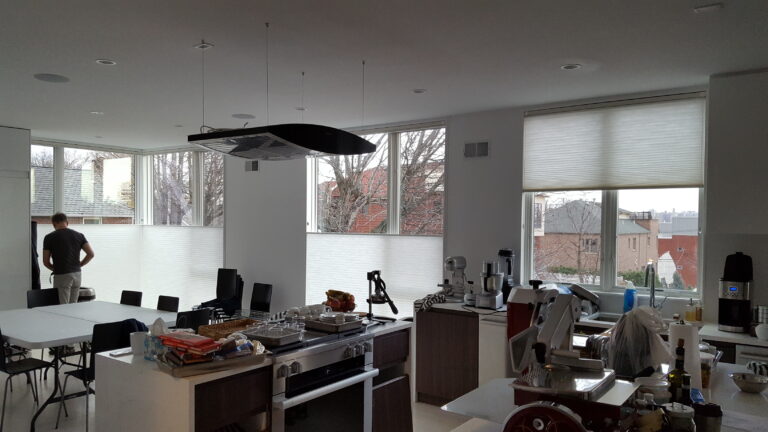
We make custom drapery, and we sell and install Hunter Douglas shades, blinds and shutters, so we have no reason to push a rod onto a window that wants a shade. If your bay, slider or arch is one of those, we will tell you before you buy hardware. If you would rather not be on the ladder, ask about installation when you book.
Call (201) 302-9111 or book a free in-home measurement. Check the towns we cover on our service area page, or browse our gallery.
Ready to Hang Curtain Rods Like a Pro?
Take your time with marking, match anchors and rod diameter to the weight of your panels, and re-check level once the fabric is up. If the window is a bay, an arch or a 10-foot slider, that is what the free measurement is for.