If you are weighing wood blinds vs faux wood blinds for a house in Bergen County, the decision usually comes down to three things: how much moisture the room sees, how much afternoon sun hits the glass, and how the blind will feel in your hand every morning. Real wood is lighter, warmer and takes stain the way furniture does. Faux wood shrugs off steam and splashes but weighs more. This guide lays out the pros and cons of each, shows which rooms favor which material, and explains how we measure and install both from our showroom in Palisades Park.
Quick Snapshot – How They Compare
Here is the short version. The rest of the post explains each row and what it means in a real room.
| Feature | Faux Wood Blinds | Real Wood Blinds |
|---|---|---|
| Material | PVC or composite wood/polymer mix | 100% natural hardwood |
| Look and Feel | Mimics grain but slightly less depth | Authentic warmth and unique grain |
| Weight | Heavier (may need sturdier hardware) | Lighter, easier to lift |
| Moisture Resistance | Excellent, will not warp in kitchens or baths | Poor, can swell, crack or fade |
| Durability | High; resists scratches and UV yellowing | Moderate; needs gentle care |
| Cleaning | Wipe or hose down | Dust and spot-wipe only |
| Cost | 15-30% cheaper on average | Premium price |
| Eco Impact | No trees cut, but PVC is not biodegradable | Renewable if sustainably sourced |
| Insulating Value | Slightly lower (solid core) | Natural wood insulates better |
What Are Faux Wood Blinds?
Faux wood blinds are made from PVC or a composite of recycled wood fibers and polymer. The slats are embossed or printed to imitate real grain, and because the material does not absorb water it stands up to humidity, scratches and UV without swelling or yellowing. They cost less than real wood and they are the easiest blind to deep-clean. Some homeowners take them down and hose them off outside.
In the Hunter Douglas line we sell, the faux wood option is called EverWood. It is the company’s alternative-wood blind, built for rooms where a real hardwood slat would warp, and it comes in wood-tone finishes and painted whites so it can match trim or cabinetry.
Pros of Faux Wood
- Moisture-proof: Ideal for bathrooms, laundry rooms and steamy kitchens.
- Tough and kid-proof: Won’t chip, peel or warp; fire-resistant in many brands.
- Low maintenance: A damp cloth handles daily dust, and you can deep clean without damaging the finish.
- Wallet-friendly: Typically 15-30% less than comparable real wood slats.
Cons of Faux Wood
- Heavier hardware needed: PVC slats weigh more than wood, so large spans can sag and the lift cord feels heavier. On wide windows the blind is often made as two blinds on one headrail so nobody has to lift a single heavy slab.
- Slightly less authentic: The grain is printed or embossed, and a buyer who knows wood will notice up close.
- Environmental trade-off: PVC production emits more CO2 than harvesting certified wood, and the slats are not biodegradable.
What Are Real Wood Blinds?
Real wood blinds are cut from basswood, oak or bamboo. Each slat has its own grain, the surface takes stain and paint beautifully, and the slats weigh much less than PVC, which matters on a tall window you raise every day.
Hunter Douglas Parkland is the real-wood line we carry. It is made from hardwood and offered in a range of stains and painted finishes, so you can match a floor, a dining table or a kitchen island.
Pros of Real Wood
- Unmatched authenticity: Each slat has unique grain, which elevates the room and supports home value.
- Lightweight: Easier to raise and lower; safer for wide casements.
- Better insulation: Natural air pockets in wood help block heat and cold.
- Eco-friendly if FSC-certified: Sustainably harvested hardwoods support responsible forestry.
Cons of Real Wood
- Sensitive to humidity: Can warp, crack or discolor in moist rooms.
- Higher upkeep: Needs gentle dusting and an occasional furniture-grade polish. No water.
- Price premium: Expect to pay more for custom stains, wide slats or exotic species.
Wood Blinds vs Faux Wood Blinds in a Bergen County Home
Our climate is the tiebreaker most of the time. Bergen County summers are humid, winters are heated and dry, and wood moves with that swing. A real wood slat over a kitchen sink or across from a shower takes on moisture in July and gives it back in January. Over a few seasons that is how slats bow and stains go patchy. Faux wood does not take on moisture, which is why we steer bathrooms, laundry rooms and most kitchens toward it. Our guides to bathroom window treatments and kitchen window treatments go deeper on those two rooms.
Sun is the second factor. A south- or west-facing window gets the strongest afternoon light, and that is where a stained real wood slat is most likely to lighten over time. Faux wood resists UV yellowing, so on a sunny wall with no overhang it is the safer finish. If heat gain is the bigger problem, read which blinds keep heat out before you decide.
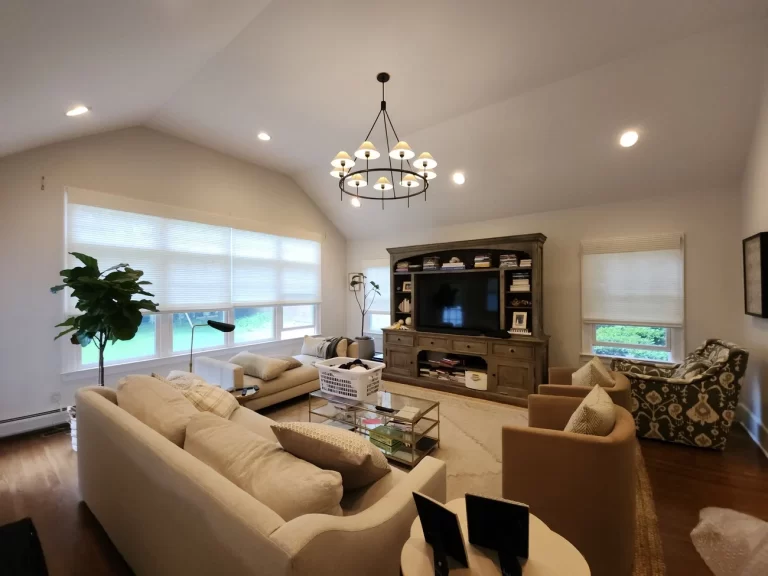
Weight is the third. Many houses here have tall double-hung windows and a wide picture window in the living room. On a 72-inch-wide window a faux wood blind is a real lift, while a real wood blind of the same size is noticeably easier to raise. For those windows we usually recommend real wood, a cordless or motorized lift, or splitting the blind into two on one headrail. See our notes on blinds for large windows and large-window treatments.
Which Blind Is Right for You?
| Room / Need | Best Choice | Why |
| Bathroom / Laundry | Faux Wood | Moisture-proof, easy clean |
| Large Picture Window | Real Wood (with tilt motor) | Lightweight and elegant |
| Rental or Kids’ Space | Faux Wood | Durable, budget-safe |
| Formal Dining / Office | Real Wood | Authentic warmth and resale value |
| Green Design Priority | FSC-Certified Wood | Renewable, lower PVC footprint |
Slat width, mount and lift decide how it looks
Material is only half the order. The same choices apply to both wood and faux wood, and they change the look more than most people expect.
- Slat width: 2 inches is the standard and suits most double-hung windows. 2½ inches shows more of the view when the slats are open and reads closer to a plantation shutter. 1 inch suits small windows and a tighter, more traditional look.
- Inside or outside mount: An inside mount sits within the window frame and shows off your trim, but the frame needs enough depth for the headrail to sit flush. An outside mount covers the frame, hides an out-of-square opening and cuts the light gap at the edges. Our measuring guide explains how to check depth.
- Lift and tilt: Corded lift is the traditional option. Cordless lift or motorization removes the cord loop, which matters with toddlers and pets; see child-safe window treatments. A motorized tilt is worth it on a real wood blind over a kitchen sink or behind a sofa where you cannot reach the wand.
- Color: Bring a cabinet door, a floor board or a paint chip. A white blind that is a shade off from white trim looks dingy, and a stain that is a shade off from the floor looks like a mistake.
For more on the options and the terminology, see our custom blinds buying guide and the wider wooden blinds guide.
Want wood tones without slats?
Two other treatments give you the natural-wood look. Woven wood shades are made from bamboo, grasses and reeds and fold up like a roman shade, so they weigh less than a slatted blind on a tall window. Read our pros and cons of bamboo shades and are woven wood shades out of style before you rule them in or out. Plantation shutters are the other route, and our window shutters guide covers the trade-offs.
Final Thoughts
Choose faux wood when the room is damp, the window is small to medium, the budget is tight or kids will be working the cord. Choose real wood when the window is tall or wide, the room stays dry, and you want the grain and the stain to match your furniture. When in doubt, mix them. Real wood in the living room and dining room, faux wood in the kitchen and baths, in the same color and slat width, so the house reads as one set of blinds from the street. Need help sizing or motorizing either option? We will match the right blind to every window.
From our own installs in Bergen County

How We Do It at the Showroom
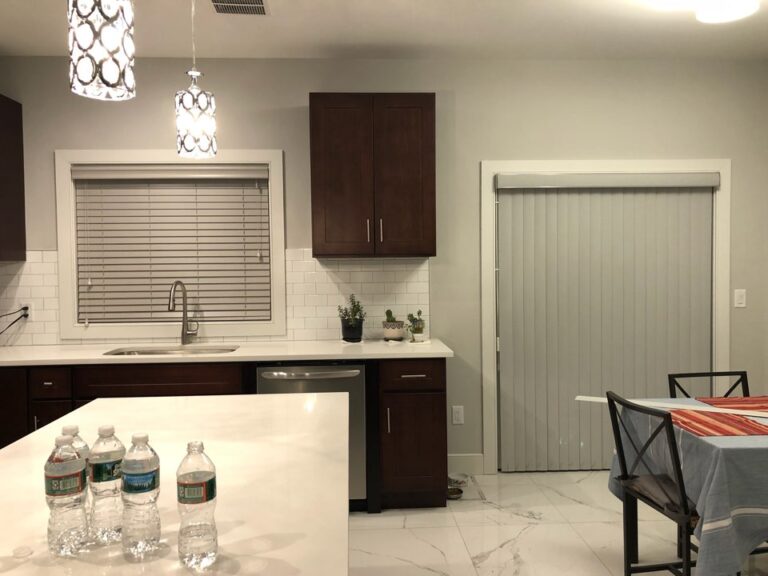
The Curtain is a family-owned window-treatment showroom at 545 Broad Ave in Palisades Park, and we have been fitting blinds in Bergen County homes since 2007. Owner and designer Sejun Park runs the showroom. We are a Hunter Douglas partner, so we sell and install both EverWood faux wood and Parkland real wood blinds, along with Hunter Douglas shades and shutters, and we make custom drapery if you want to layer fabric over a blind in the living room or bedroom.
Every wood blind order starts with a free in-home measurement. We measure each window in your house rather than working from your numbers, which is where inside-mount depth, out-of-square frames and the two-blinds-on-one-headrail question get settled. You then get a written quote for every window, so you can compare rooms side by side before you commit.
Book the measurement at our free consultation page or call (201) 302-9111. We cover the towns listed on our service area page, and you can see recent installs in the gallery and hear from neighbors on our reviews page.