The panels are down and folded on a chair in the hall. Deciding what to do with old curtains has a fast answer and a longer one, and both start the same way: sort them by condition instead of by how much you liked them. Then treat the bare window as the chance to fix whatever the old curtains never did well, because the replacement is rarely the same thing in a different color.
Short answer
Wash and press the panels, then sort them by condition. Clean and intact goes to a donation bin or a neighbor, damaged fabric with good sections left in it gets cut up for pillow covers or runners, and sun-rotted or mildewed fabric goes to textile recycling rather than to a charity. Once the window is bare, measure it before you buy anything, because the size and the light control are usually the real problem, not the pattern.
What to Do with Old Curtains: Sort Before You Decide
Run the panels through a wash cycle if the care label allows it, and press them flat. A lot of curtains that look finished are only creased and dusty, and a pressing tells you whether the fabric still has life in it. If the wrinkles will not come out, our guide on getting wrinkles out of curtains covers the steaming order that works on lined panels. Once they are clean, hold each one up to a window and look at it from the light side.
| What you see | What it means | Best move |
|---|---|---|
| A pale stripe down the leading edge, fabric brittle to the touch | Sun rot. The fibers tear when you tug them | Cut into rags or take to textile recycling |
| Lining pulling away from the face fabric | The stitching or the lining has failed, not the fabric | Salvage the face fabric for flat projects |
| Fold lines that survive washing and a hot iron | The creases are set into the weave | Cut around them for pillows or placemats |
| Hems floating several inches above the floor | They were the wrong length from day one | Donate, then measure for a proper replacement |
| Clean, current, simply wrong for the room | Nothing is wrong with them | Rehang on a smaller window or pass them on |
Ugly Curtains Are Not the Same as Worn Out Curtains
Plenty of the panels people call ugly curtains are fine fabric hung badly. Three problems account for most of it. The rod sits on the window trim instead of several inches above it, which makes the ceiling feel low. The panels are too narrow, so they read as two stiff ribbons flanking the glass rather than as drapery. And the hem stops short of the floor. Fabric that gathers to roughly two to two and a half times the width of the rod is what makes a panel look full rather than skimpy, and that is a hardware and yardage decision more than a taste decision.
Before you blame the fabric, read should curtains touch the floor and the curtain rods and hardware guide. If the panels still look tired after you fix the height and the fullness, how often you should replace your curtains gives you the wear signs that mean it is genuinely time.
Where Old Curtains Can Go Around Bergen County
Curtains are bulky, so places that take clothing do not always want them. Call ahead and ask before you load the car.
- Thrift and consignment shops. Lined panels in current colors move quickly. Bring them clean, pressed, and in matched pairs, with the hardware if you have it.
- Animal shelters and rescues. Fabric too stained to sell is often welcome as bedding. Ask whether they want it cut down first.
- School and community theater programs. Costume and set builders take heavy velvet, brocade, and blackout lining that nobody else wants.
- Textile recycling. Many municipal drop-off bins accept unwearable textiles for fiber recovery. That is where sun-rotted fabric belongs.
- Neighbors and local giveaway groups. The fastest option for a good pair you simply outgrew.
Upcycling Projects Worth the Sewing Time
Cut the damaged sections away first, then work from the biggest usable rectangles down to the scraps. Measure twice, because you can always trim more and you cannot put fabric back.
Pillow covers
The easiest win, and the one that uses printed or textured curtain fabric best. For an 18-inch pillow form, cut two 19-inch squares, which leaves a half-inch seam allowance on each side. Sew three sides with the fabric wrong side out, turn it, insert the form, then close the fourth side by hand or add a zipper. Several small pillows are a better use of limited fabric than one oversized one.
Table runners and placemats
Cut a runner 14 to 16 inches wide and long enough to overhang each end of the table by about six inches. Placemats at roughly 13 by 18 inches fit a standard setting. Hem the edges twice at a half inch, or finish them with a flat trim. Heavier drapery fabric lies flatter here than lightweight sheers.
Totes, slipcovers, and headboards
Save this group for the sturdy stuff, meaning canvas-weight cotton, denim-weight blends, and upholstery-grade jacquard. Doubled handles and a boxed bottom make a tote that holds groceries. Ottoman and stool cushions are the realistic slipcover projects for one pair of panels. A padded headboard takes more yardage than most people expect, so measure before you plan on it.
Turning a panel into a Roman shade
This one comes up constantly, and it is worth being honest about. Converting drapery into a Roman shade means adding dowel pockets, rings, a cord or lift system, and a mounting board, and the folds only stack evenly if the fabric is cut square and the rings line up across every row. A made-to-measure Roman shade hangs flatter and operates more cleanly, and modern lift systems keep loose cords out of a child’s reach. If you like the look, our Roman shade guide walks through fold styles and lining.
Outdoor uses
Heavy, tightly woven panels can become patio cushion covers or a picnic blanket. Indoor fabric was never dyed for direct sun, so expect fading in one season and use it where that does not matter.
What to Hang on the Bare Window
This is the part that decides whether you are doing this again in three years. Start with measurements rather than fabric. Note the width of the window opening, the height from the top of the trim to the floor, the depth of the frame if you want anything mounted inside it, and any obstruction like a crank handle or a deep sill. Our measuring guide covers the inside and outside mount numbers, and the custom window treatments guide explains where a made-to-measure product earns its keep over a stock size.
Then decide what the window has to do. Light control, privacy after dark, and heat are three separate jobs, and one layer rarely handles all three. Layering a shade under drapery is the usual answer: the shade does the work, the fabric does the softening. How to layer curtains covers the rod and stack details that keep a layered window from looking crowded. If the old curtains were on a slider that never opened cleanly, look at sliding door treatments before you buy another set of panels.
What we would put on the window
- Street-facing bedroom where the old panels never blocked lightA blackout cellular shade behind a lined drapery panel.
- Living room with a wide sliderA single wide solar or roller shade, with stationary drapery panels at each end so the door stays clear.
- Bathroom or laundry where fabric keeps getting dampFaux wood blinds or a moisture-tolerant shade instead of another curtain.
- Dining room you want to feel finishedPleated custom drapery to the floor, on a rod mounted well above the trim.
- Kitchen window over the sinkA short cellular or Roman shade mounted inside the frame, clear of the faucet.
For the two rooms people ask about most, cellular shades are the choice when winter drafts and summer heat are the complaint, since the honeycomb pockets trap a layer of air at the glass. Solar shades are the choice when you want to cut glare on a screen and keep the view. For a bathroom, privacy and moisture solutions that last explains why fabric panels rarely survive there. And if you want drapery done properly, choosing and installing custom draperies covers pleat styles, lining, and installation height.
From our own installs in Bergen County
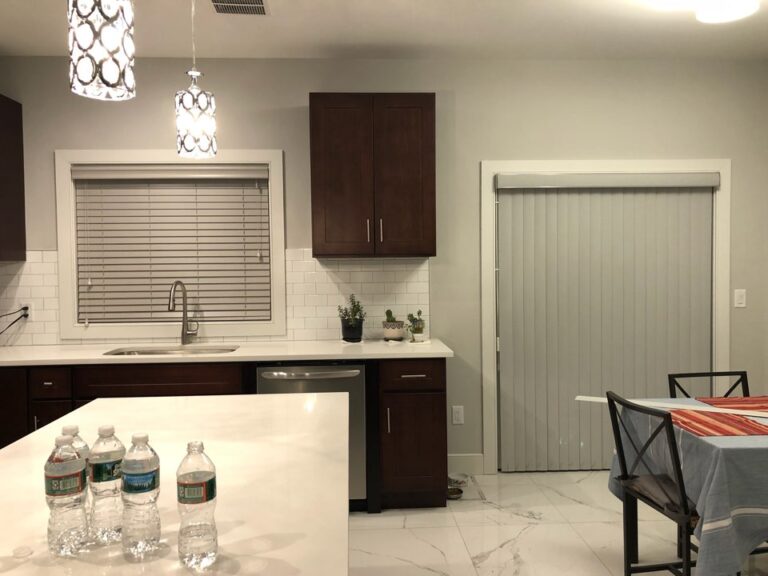
Measured and Made in Palisades Park
The Curtain is a family-owned window-treatment showroom at 547 Broad Ave in Palisades Park, in business since 2007 and serving Bergen County. Sejun Park is the owner and designer. We are a Hunter Douglas partner, so we sell and install Hunter Douglas shades, blinds, and shutters, and we also make custom drapery for the windows where fabric is the right answer.
Bring a photo of the old panels if you want to match a color you liked. We offer a free in-home measurement and a written quote, which means the sizes are ours to get right rather than yours. You can see finished rooms in the gallery, browse shades and the full range of window treatments, or call (201) 302-9111. To pick a time, use the free consultation page.